
FAQ about Purchasing Tungsten Needle
This FAQ provides systematic answers to the most common questions regarding the purchasing of tungsten needles. It covers pricing, specifications, material performance, processing methods, and typical application scenarios, helping customers make informed technical and business decisions.
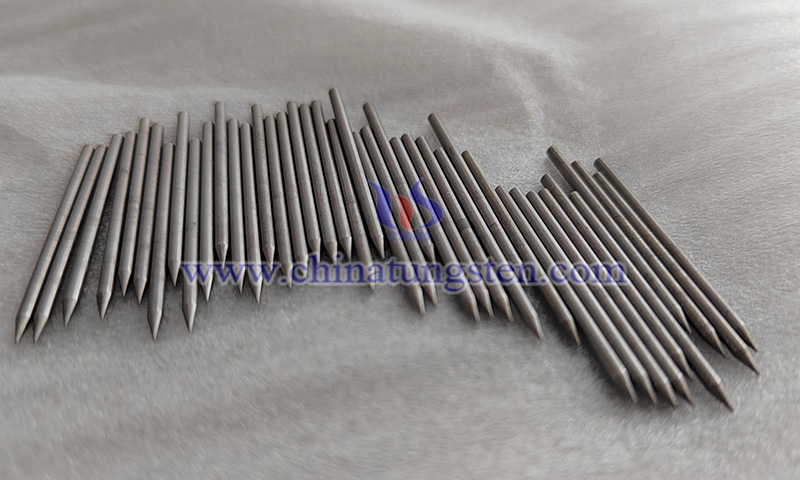
The price of a tungsten needle depends on multiple factors, including material purity, diameter, length, processing precision, tip structure, and order quantity, so prices vary significantly between specifications.
Tungsten is a high-melting-point, rare metal. Its international market price is influenced by tungsten ore supply, Ammonium Paratungstate (APT) prices, and tungsten powder processing costs. Generally, high-purity tungsten (≥99.95%) is significantly more expensive than standard industrial tungsten.
Processing difficulty is closely related to needle size. Tungsten’s high hardness and low plasticity require multiple manufacturing steps such as powder metallurgy sintering, rotary forging, drawing, and precision grinding. Micro tungsten needles with diameters below 0.1mm demand extremely high equipment precision, stable clamping, and skilled operation, increasing production cost.
Tip design also affects price. Flat Tips, Tapered Tips, Sharp Tips, and Ball Tips have different manufacturing requirements. High-precision tapered tips usually require CNC (Computer Numerical Control) grinding, making them more costly than standard flat tips.
Surface treatments such as electropolishing, nickel plating, or gold plating improve conductivity, corrosion resistance, and surface finish but increase costs.
Order quantity is another important factor. Bulk orders can share equipment setup and inspection costs, reducing unit price. To get an accurate quote, provide diameter, length, tip shape and angle, tolerance, surface treatment, and order quantity.
2. What is the MOQ (Minimum Order Quantity) for tungsten needles?MOQ depends on product specification, processing complexity, and production planning. Standard needles (e.g., Φ0.5mm or larger, simple structure) usually allow small-batch orders due to mature processes and lower equipment setup costs.
For micro or high-precision needles (diameter <0.1mm), production requires high-precision CNC (Computer Numerical Control) grinding or micro-machining equipment and inspection via microscope or laser measurement. These items typically have minimum order quantities to ensure efficiency and control costs.
Special structures such as multi-step tips, precise taper angles, or surface treatments (electropolishing, plating) may require custom fixtures or processes, also affecting MOQ. Providing complete specifications or drawings before ordering is recommended.
3. How long is the lead time for custom tungsten needles?Lead time depends on product complexity, order quantity, and production process. Manufacturing involves powder metallurgy sintering, forging or drawing, precision grinding, and final inspection. For standard specifications with available stock and mature processes, production can be completed quickly. Micro or high-precision needles (diameter <0.1mm or special taper angles) require high-precision grinding and inspection via microscope or laser, extending lead time.
Surface treatments such as electropolishing, nickel plating, or gold plating further increase production time. Early planning and detailed technical specifications are recommended for custom orders.
4. Are tungsten needles available in stock?Some standard needles (diameter ≥0.5mm, common lengths) may be stocked for rapid delivery due to widespread industrial use. Micro or high-precision needles (diameter <0.1mm, special taper tips, or unusual lengths) are usually made-to-order.
In semiconductor testing, precision electronics, and research equipment, strict control of tolerance, surface roughness, and straightness is required, so these high-precision needles are typically produced per customer drawings.
5. What factors affect the price of tungsten needles?Tungsten needle pricing is influenced by raw material cost, processing difficulty, size, tolerance, surface treatment, and order quantity. Tungsten is a refractory metal with a melting point of ~3420℃ and density ~19.3g/cm³. Its raw material cost is closely linked to APT market prices.
High hardness and brittleness require diamond grinding or high-precision equipment, especially for micro needles (diameter <0.1mm), increasing production cost. Tight tolerances, surface roughness requirements, and treatments like electropolishing or plating also affect pricing. Bulk orders reduce unit cost by sharing setup and inspection expenses.
6. Can tungsten needles be customized?Yes, needles can be customized in diameter, length, tip structure, taper angle, and surface treatment. Diameters range from microns to millimeters. For example, semiconductor testing may use <0.1mm, while EDM (Electrical Discharge Machining) electrodes may use 0.1–2mm. Tip shapes include flat, tapered, sharp, or multi-step structures. Taper angles can be customized (10°, 20°, 30°, etc.).
Surface treatments such as electropolishing, nickel plating, or gold plating improve roughness, conductivity, and corrosion resistance. Providing drawings or specifications ensures accurate customization.
7. What is the smallest diameter achievable for tungsten needles?Under micro-fabrication conditions, tungsten needles can reach micrometer-scale diameters. Actual limits depend on equipment precision and material quality. Tungsten’s high melting point, strength, and thermal stability make it suitable for micro electrodes or contact needles. Ultra-fine manufacturing requires careful stress control to avoid micro-cracks or breakage. Applications include wafer test probes, microelectronic contact pins, and microscopic manipulation, where straightness, roundness, and surface quality are critical.
8. What is the minimum diameter of micro tungsten needles?Advanced micro-fabrication can achieve diameters down to ~0.01mm or smaller. High-precision drawing, grinding, and microscopic inspection are required.
In semiconductor testing, micro tungsten needles are used as wafer probes or microelectronic test pins, needing very small contact areas for high-precision measurements. Extreme miniaturization requires high material purity (≥99.95%), uniform internal structure, and precise manufacturing equipment.
9. What tolerances can tungsten needles achieve?Tolerance depends on diameter, processing method, and equipment precision. Standard industrial needles can reach ±0.005mm. Micro needles (0.05–0.10mm) can achieve ±1–3μm. High-precision applications may require tight straightness and roundness control. Electropolishing can achieve surface roughness as low as Ra0.2μm, improving contact stability and lifespan.
10. What are common tungsten needle specifications?Specifications are defined by diameter, length, tip structure, and tolerance.
a) Diameters: 0.02–3mm. Semiconductor probes are available in diameters from 0.02 mm to 0.5 mm. EDM (Electrical Discharge Machining) electrodes are available in diameters from 0.1 mm to 2 mm.
b) Lengths: 5–150mm, depending on equipment and workspace. Microscopic probes are available in lengths from 10 mm to 40 mm. Special electrodes are available in lengths from 50 mm to 120 mm.
c) Tip structures: flat, tapered, sharp, ball.
d) Taper angles: 10°–60°, customizable.
e) Tolerance and straightness: Micro needles can achieve ±0.005mm or less; straightness deviation ≤0.02mm/100mm.
To ensure compatibility with equipment and processes, specify diameter, length, tip shape, taper angle, and tolerance when ordering.
11. Can the length of tungsten needles be customized?Yes, tungsten needle length can usually be customized according to specific application requirements. Different equipment structures, clamping methods, and working spaces require varying needle lengths, so custom lengths are common in industrial applications. Industrial tungsten needles typically range from 5–150mm, and longer specifications can be provided for special equipment.
When designing needle length, factors such as needle rigidity, installation method, and operational stability must be considered. For example, in semiconductor testing or microscopic manipulation, shorter needles improve overall rigidity and reduce vibration impact on precision. In Electrical Discharge Machining (EDM) or electrode applications, needle length is designed according to electrode clamping structure and machining depth.
For micro tungsten needles, increased length demands higher straightness and stability. Precision grinding or straightening processes are often used to control straightness and ensure stable operation in equipment.
12. Can the tip angle of tungsten needles be customized?Yes, the tip angle can be customized according to application needs. Different applications require different tip angles and shapes, which can be controlled through precision grinding.
Common taper angles range from 10°–60°. In semiconductor wafer testing or microelectronic contact needles, smaller angles create smaller contact areas for higher precision. In electrical discharge machining or discharge electrode applications, larger angles improve tip strength and electrode lifespan.
Tip angles are typically controlled using high-precision CNC (Computer Numerical Control) grinding and verified via microscopes or optical measurement equipment. For high-precision applications, tip radius or apex radius may also be controlled to ensure stable contact performance.
13. What is the typical purity of tungsten needles?Industrial tungsten needles are usually made of high-purity tungsten, typically ≥99.95%. High material purity is crucial for applications like semiconductor testing, electronic packaging, and research equipment, ensuring stable performance.
High-purity tungsten has a uniform grain structure and low impurity content, improving conductivity, thermal stability, and high-temperature strength. Tungsten’s melting point is ~3420℃, providing excellent structural stability at high temperatures, making it suitable for high-temperature electrodes and components.
Impurities such as oxygen, carbon, or metallic elements can affect mechanical performance and lifespan. High-precision applications typically require high-purity tungsten to ensure uniform internal structure and minimize potential defects.
14. What is the difference between pure tungsten needles and tungsten-rhenium needles?Pure tungsten needles are made of high-purity tungsten, offering high melting point, hardness, and good conductivity, suitable for electrodes, probes, and high-temperature components.
Tungsten-rhenium (W-Re) needles are tungsten alloys with rhenium (Re) additions, commonly W-3Re, W-5Re, or W-25Re. Rhenium improves ductility, high-temperature strength, and thermal shock resistance, enhancing stability under repeated heating and cooling.
In extreme high-temperature environments, such as thermocouples, aerospace testing, or high-temperature probes, W-Re needles provide better reliability. For standard industrial or electrode applications, pure tungsten needles are usually sufficient.
15. What is a tungsten-rhenium alloy needle?A tungsten-rhenium needle is a tungsten-based alloy with a specific proportion of rhenium (Re). Rhenium, a high-melting-point rare metal (~3180℃), significantly enhances mechanical properties when alloyed with tungsten.
Compared to pure tungsten, W-Re alloys offer improved ductility, thermal shock resistance, and higher strength and structural stability at elevated temperatures. This makes them ideal for high-temperature probes and measurement devices. Applications include high-temperature thermocouples, arc electrodes, and aerospace high-temperature experimental equipment, where materials must maintain stable performance under heat.
16. How are tungsten needles produced?Tungsten needles are typically manufactured using powder metallurgy. Tungsten’s extremely high melting point makes conventional casting impractical, so powder metallurgy is used.
High-purity tungsten powder is pressed into shapes and sintered at high temperature to create dense tungsten blanks. The blanks are then forged or drawn into fine rods. Precision grinding adjusts diameter and forms the tip. Final steps include dimensional inspection, microscopic evaluation, and surface treatment to produce the finished tungsten needle.
17. Are tungsten needles made by powder metallurgy?Yes. Tungsten’s melting point (~3420℃) is far above most industrial metals, making conventional casting impractical. Powder metallurgy involves tungsten powder preparation, pressing, high-temperature sintering, and subsequent plastic processing. During sintering, powder particles diffuse to form a dense structure with excellent mechanical properties. Post-sintering processes such as forging, drawing, or rolling refine grain structure, increase density, and enhance mechanical performance. Final precision grinding produces the finished needle structure.
18. What industries use tungsten needles?Tungsten needles are widely used due to high melting point, hardness, and conductivity.
a) Semiconductors: wafer test probes, microelectronic test pins.
b) Machining: Electrical Discharge Machining (EDM) electrodes for micro-hole, precision mold, and microstructure processing.
c) Electronics: precision contact pins, microcurrent testing.
d) Research and medical equipment: microscopic manipulators, high-temperature electrodes.
19. Can tungsten needles be used for Electrical Discharge Machining (EDM)?Yes. Tungsten needles serve as fine electrodes in EDM (Electrical Discharge Machining). High melting point (~3420℃), good conductivity, and arc resistance reduce electrode wear. Compared with copper or graphite electrodes, tungsten maintains shape better in micro-machining. Typical applications include micro-holes <0.5mm, precision molds, and complex microstructure machining, such as medical device micro-holes or precision electronic structures.
20. Can tungsten needles be used as probes?Yes. Tungsten needles can function as probes, known as tungsten probe needles, in electronic and semiconductor testing. High hardness and good conductivity ensure stable contact during repeated testing.
In semiconductor wafer test equipment, tungsten needles are used in probe cards to detect circuit performance. In microelectronics or high-frequency testing, they measure microcurrents or precise signals. They are also used in microscopic manipulation and experimental equipment as micro-contact pins, where hardness and wear resistance enhance lifespan and testing stability.
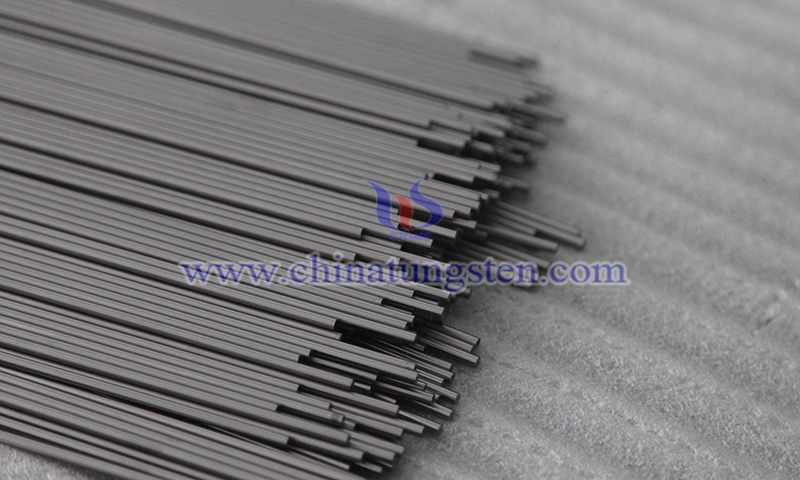
Yes. Tungsten needles, commonly referred to in industry as tungsten electrodes, are widely used as precision EDM (Electrical Discharge Machining) electrodes due to their extremely high melting point, good conductivity, and excellent arc erosion resistance. Tungsten’s melting point is ~3420℃, far higher than copper (1085℃) and steel (~1500℃), making it resistant to melting during discharge and reducing electrode wear. Its resistivity is ~5.5×10⁻⁸Ω·m (20℃), ensuring stable conductivity and electrode shape even under high-energy discharge.
Tungsten needle electrodes are commonly used in precision mold EDM, micro-hole machining (Micro EDM), fuel injector micro-holes, medical device microstructures, and localized EDM of hard alloys and high-hardness materials. For micro-holes of 10–200μm, they achieve high machining precision with minimal electrode wear.
22. Are tungsten needles wear-resistant?Yes. Tungsten needles have high hardness and excellent wear resistance. Pure tungsten typically has a Vickers hardness of HV350–HV450, much higher than copper (HV50–HV100) or ordinary structural steel (HV150–HV250). Its density is ~19.3g/cm³, and elastic modulus ~400GPa, making it resistant to plastic deformation or significant wear under prolonged contact or friction.
Therefore, tungsten needles are suitable for high-frequency contact or long-term friction applications, such as precision contact electrodes, semiconductor test probes, precision inspection pins, high-frequency conductive contacts, and micro-mechanical components, maintaining dimensional and surface stability.
23. How resistant are tungsten needles to arc erosion?Tungsten has an extremely high melting point and good electrical conductivity, providing excellent arc erosion resistance. Its melting point is ~3420℃ and boiling point ~5930℃, so it resists melting or evaporation under high-temperature arcs. Tungsten’s thermal conductivity (~173 W/m·K) quickly dissipates heat from arcs, reducing local overheating.
During arc discharge, tungsten needles exhibit low electrode wear, slow erosion rates, and good shape retention. Compared with copper or steel electrodes, tungsten needles have longer service life in high-energy arc environments. They are widely used in EDM electrodes, high-voltage discharge equipment, plasma device electrodes, and vacuum arc apparatus.
24. Are tungsten needles easy to break?Tungsten is a hard and brittle metal. Despite high strength and hardness, it has low ductility, making it susceptible to breakage under bending, impact, or lateral stress. Pure tungsten typically has an elongation of 1–5%, much lower than copper or steel.
Excessive bending, impact loads, or eccentric clamping can induce stress concentration, causing brittle fracture. In practice, proper design and usage—avoiding lateral loads, adding supports, optimizing length-to-diameter ratios, and proper installation—can reduce breakage risk. Under correct design and use, tungsten needles remain stable with long service life.
25. What causes tungsten needle breakage?Breakage is usually caused by mechanical stress, material defects, and environmental factors. Common reasons include: bending-induced stress concentration, impact loads causing sudden failure, lateral stress causing shear fractures, and misaligned installation causing localized stress.
Surface micro-cracks formed during processing or use can initiate fractures. High-temperature oxidation may reduce material strength, while internal defects such as pores, inclusions, or non-uniform grain structure may compromise stability. Using high-purity tungsten, optimizing powder metallurgy and sintering, improving processing accuracy, and proper structural design can reduce breakage risk.
26. What is the service life of tungsten needles?Service life depends on operating conditions including current, temperature, discharge frequency, mechanical load, and environment. In EDM (Electrical Discharge Machining) applications, higher discharge energy accelerates electrode wear, reducing lifespan.
Due to tungsten’s high melting point and thermal conductivity, it maintains low erosion rates even under high-energy discharge. Compared with copper electrodes, tungsten electrodes may reduce wear by 30–70% under identical conditions. In vacuum or inert gas environments (e.g., Ar, N₂), oxidation is minimized, improving structural stability and extending service life.
27. Are tungsten needles suitable for vacuum environments?Yes. Tungsten has excellent thermal and chemical stability in vacuum, making it ideal for high-temperature vacuum equipment and vacuum electronic devices. Its low vapor pressure prevents significant evaporation at high temperatures, maintaining structural stability above ~2000℃. Lack of oxygen in vacuum minimizes oxidation, preserving material properties. Applications include vacuum furnace heating components, electron beam devices, vacuum electron guns, high-temperature vacuum testing, and internal components of semiconductor equipment.
28. Will tungsten needles oxidize?At room temperature in air, tungsten is chemically stable. However, at high temperatures in air, it may oxidize. Above ~400–500℃, tungsten reacts with oxygen to form oxides such as WO₃. Higher temperatures accelerate oxidation, potentially forming oxide layers, reducing strength, or causing material loss.
For high-temperature applications, tungsten needles are typically used in vacuum or inert gas environments (Ar, N₂) to prevent oxidation and maintain stable performance.
29. Are tungsten needles conductive?Yes. Tungsten has good electrical conductivity, making it suitable for electrodes and conductive components. Its resistivity is ~5.5×10⁻⁸Ω·m (20℃). While slightly lower than copper or silver, it remains stable under high temperatures. Compared with copper, tungsten’s advantages are high melting point and high-temperature strength, resisting softening or deformation under high current or temperature. Tungsten needles are used in EDM (Electrical Discharge Machining) electrodes, plasma device electrodes, vacuum electronics, precision contact pins, and semiconductor test probes.
30. Are tungsten needles harmful to humans?Solid tungsten is chemically stable and generally low in toxicity. Under normal use, tungsten needles do not release harmful substances and pose minimal risk, making them suitable for electronics, industrial equipment, and some medical devices.
However, tungsten processing (grinding, machining, or powder metallurgy) can generate fine tungsten dust or particles. Long-term inhalation may irritate the respiratory system. Appropriate measures—local exhaust, dust collection, and personal protective equipment—are recommended. Finished tungsten needles are safe for normal use.
31. Can tungsten needles be reused?Yes. Tungsten needles can typically be reused multiple times if they do not suffer severe wear, bending, or surface damage. Tungsten’s high hardness and excellent wear resistance allow long service life under stable operating conditions.
In electrode applications, tungsten needles have superior arc erosion resistance, and their wear rate is generally much lower than copper or graphite electrodes, making them highly reusable in micro-EDM (Electrical Discharge Machining) or precision machining.
However, in semiconductor testing or precision contact applications, if the needle tip wears or the contact resistance changes, replacing the tungsten needle may be necessary to maintain testing accuracy.
32. How are tungsten needles sharpened?Tungsten needle tips are typically sharpened using precision mechanical grinding. Due to tungsten’s high hardness, diamond grinding wheels or high-precision CNC (Computer Numerical Control) grinding equipment are usually required.
For micro-scale tungsten needles, grinding is often performed under a microscope to ensure the tip angle and shape meet design specifications. Some high-precision applications may also use electrochemical machining or micro-grinding techniques to further improve tip shape consistency and dimensional accuracy.
33. Can tungsten needles be electropolished?Yes. Tungsten needles can be electropolished to improve surface quality. Electropolishing is an electrochemical process that removes microscopic protrusions on the metal surface, effectively reducing surface roughness and removing micro burrs.
After electropolishing, surface roughness can often be reduced to Ra0.2μm or lower. This is especially important for semiconductor probes or precision contact needles, as lower surface roughness improves contact stability and reduces contact resistance fluctuations.
34. Can tungsten needles be nickel-plated?Yes. Tungsten needles can be coated with nickel or other surface plating layers. Nickel plating is typically done via chemical or electroplating methods, forming a uniform, dense nickel layer on the needle surface.
The nickel layer enhances corrosion resistance and improves conductive contact performance. In some electronic connection or probe applications, the nickel layer also serves as a transition layer for subsequent gold plating, increasing adhesion and overall stability.
35. How should tungsten needles be stored?Tungsten needles should be stored in a dry, clean environment free of corrosive gases to prevent surface oxidation or contamination. Due to tungsten’s high hardness and brittleness, mechanical shocks or bending stress should be avoided during storage and transport to prevent damage to the needle body or tip.
For high-precision tungsten needles, it is recommended to use protective cases or shockproof packaging and maintain low humidity, ensuring dimensional stability and surface quality over long-term storage.
For any inquiry, please contact tungsten needle manufacturer: CTIA GROUP
Email: sales@chinatungsten.com
Tel: 0086 592 5129696 / 0086 592 5129595
Website: www.tungsten.com.cn
WeChat:

More info>>