
CTIA Tungsten Needle in Electron Microscopy and Electron Emission
CTIA tungsten needle in electron microscopy and electron emission systems serves as a stable electron source and high-energy beam emitter. In electron microscopy and electron beam processing systems, both thermionic emission and Cold Field Emission (CFE) require materials with excellent thermal stability, emission consistency, and structural reliability. With a high melting point (3422℃), low vapor pressure, work function of ~4.5 eV, and superior high-temperature mechanical properties, tungsten needle maintains stable geometry and emission performance under high temperatures or strong electric fields.
In practical applications, electron source materials must provide stable emission over long operation periods while suppressing atomic migration, minimizing emission noise, and maintaining beam consistency. Leveraging CTIA’s expertise in high-purity control, uniform grain structure, and precise tip shaping, tungsten needle ensures stable electron emission in high-resolution imaging and nanoscale processing systems.
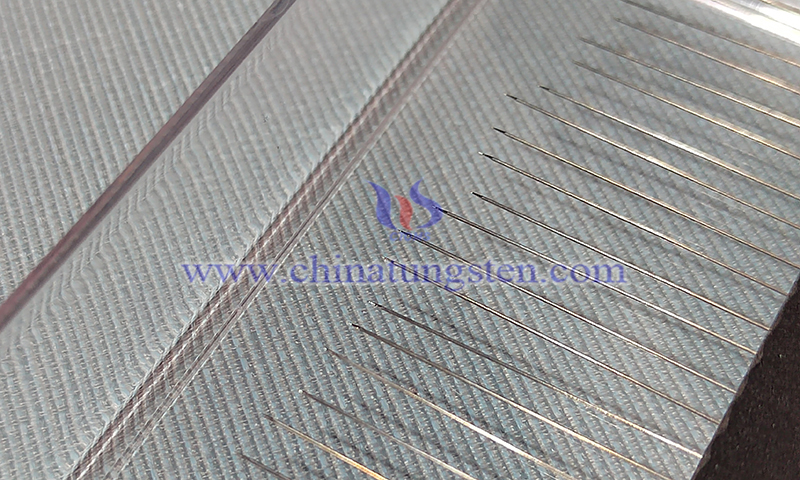
Scanning Electron Microscope (SEM) typically employs thermionic emission. The tungsten needle cathode is heated to ~2700–2800 K to overcome the work function barrier, and emission current stability directly affects image resolution and contrast.
CTIA tungsten needle maintains extremely low vapor pressure at high temperatures (minimal evaporation above 2500 K), reducing contamination in vacuum systems. Its high melting point and creep resistance prevent tip collapse during thermal cycling. CTIA controls grain size and purity to limit grain boundary migration and localized overheating, extending cathode life and stabilizing μA-level emission current.
2. Tungsten Needle for TEM (Transmission Electron Microscope)Transmission Electron Microscope (TEM) requires high electron source brightness and energy distribution stability, often using field emission or highly stable thermionic sources. Tungsten needles provide high beam coherence and minimal energy spread. In TEM, emission stability and tip structure consistency influence resolution. Low vapor pressure maintains a clean emission surface in high vacuum (10⁻⁷–10⁻⁹ Pa). CTIA optimizes tip curvature and material uniformity to enhance beam stability and reduce emission drift.
3. Tungsten Needle for FEG (Field Emission Gun)Field Emission Gun (FEG) operates via cold field emission under high electric fields (~10⁷–10⁹ V/m). Tungsten needles must have minimal tip radii and stable atomic structures. Emission current density can reach 10⁹ A·m⁻²·sr⁻¹ with energy spread <0.3 eV, suitable for high-resolution imaging. Low surface diffusion and high melting point suppress atomic migration from Joule heating, reducing current fluctuations and flicker. CTIA applies single-crystal orientation control and high-temperature annealing to stabilize the tip and lower vacuum breakdown risk.
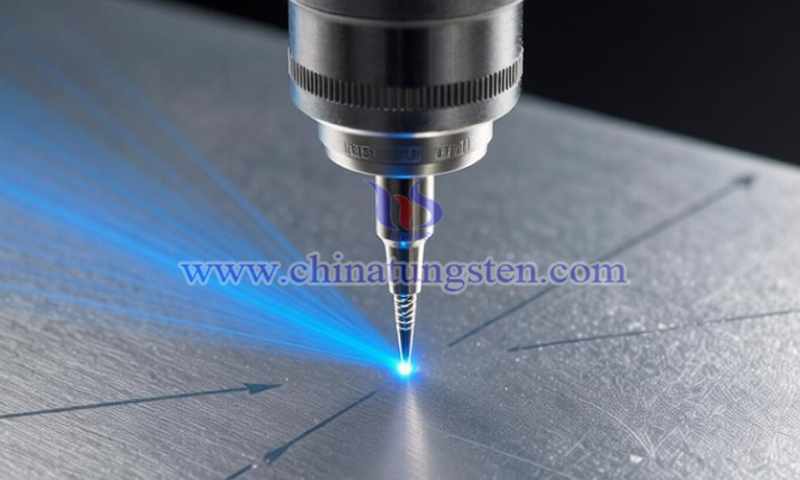
Electron Beam Lithography (EBL) achieves sub-10 nm patterning and demands high brightness, minimal beam size, and stability. Tungsten needles serve as high-brightness field emission sources. Small emission areas and high spatial coherence form nanoscale beam spots for precise patterning. Tungsten resists atomic migration and maintains tip geometry during long exposures. CTIA ensures tip precision and purity to improve beam reproducibility and dimensional accuracy.
4. Tungsten Needle for EBID (Electron Beam Induced Deposition)Electron Beam Induced Deposition (EBID) deposits material locally using electron beam interaction with precursor gases. Stable emission affects deposition morphology and precision. Tungsten needles deliver stable local beam density (typically A/cm²) to maintain uniform deposition rates. CTIA optimizes material density and minimizes impurities to reduce emission noise and improve nanoscale structure consistency.
5. Tungsten Needle for EBW (Electron Beam Welding)Electron Beam Welding (EBW) is a high-energy process with beam power density 10⁷–10⁹ W/cm², requiring stable sources and high-temperature resilience. Tungsten needles act as the emission core. High melting point and low vapor pressure prevent evaporation and structural degradation under high-power operation. High strength and thermal fatigue resistance resist long-term stress. CTIA controls purity and grain structure to limit atomic migration, maintaining consistent beam output and welding quality.
In electron microscopy and electron emission applications, the key advantages of tungsten needles are thermal stability, low vapor pressure, stable work function, and structural reliability. Combined with CTIA’s expertise in high-purity control, crystal orientation optimization, and precision machining, tungsten needles deliver long-term stable emission under extreme thermal and electric field conditions. As imaging resolution and nanoscale beam processing advance, the demand for stable electron source materials will grow, ensuring tungsten needles remain indispensable in high-end electron microscopy and nanofabrication.
For any inquiry, please contact tungsten needle manufacturer: CTIA GROUP
Email: sales@chinatungsten.com
Tel: 0086 592 5129696 / 0086 592 5129595
Website: www.tungsten.com.cn
WeChat:

More info>>