
CTIA Tungsten Needle in Biomedical and Neural Engineering
CTIA tungsten needle serves as a critical microelectrode and micro-manipulation tool in biomedical and neural engineering, widely used in neural signal acquisition, single-cell puncture, microinjection, electromyography, brain-computer interfaces, and microelectrode array research. This field requires extremely fine tip dimensions at micro- to nanoscale, high mechanical rigidity, stable electrical performance, and biocompatibility, which directly determine experimental accuracy, operational safety, and long-term reliability. With a high elastic modulus (~400 GPa), high tensile strength, stable resistivity (~5.6×10⁻⁸ Ω·m), and good chemical inertness, tungsten needle maintains bending stiffness and electrical consistency even at small diameters, making it suitable for long-term implantation and high-precision operations.
Through tip miniaturization, electrochemical etching, precision grinding, and grain optimization, tungsten needle achieves ultra-small curvature radius, smooth surface, and consistent geometry, reducing tissue damage and operation resistance while improving signal-to-noise ratio and repeatability. CTIA utilizes high-purity materials, precision wire drawing, tip polishing, and surface cleaning processes to provide stable and reliable solutions for biomedical and neural engineering applications.
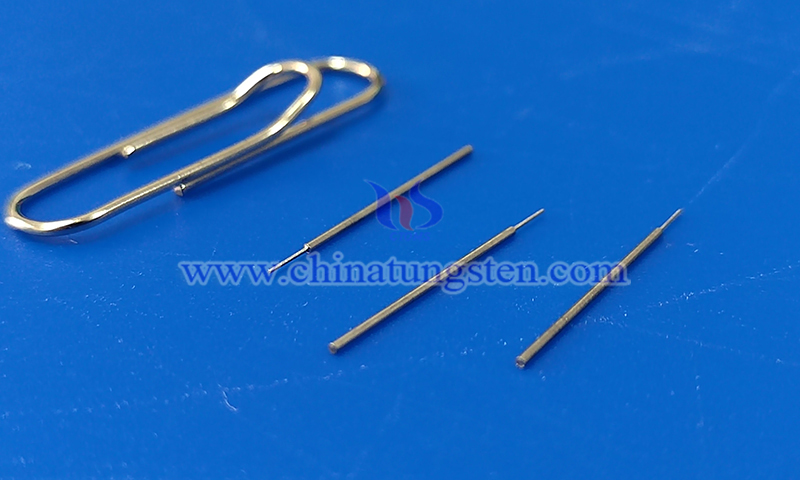
Tungsten needle used in Neural Electrode (NE) applications penetrates brain or peripheral nerve tissue to record microvolt-level neural action potentials. Tip diameter is typically controlled within 25–75 μm to minimize tissue damage while maintaining sufficient mechanical strength for precise insertion.
Tungsten needle can be processed to diameters below 50 μm with high straightness and bending stiffness, preventing lateral deviation during insertion. Its low resistance and stable interface impedance improve signal-to-noise ratio and reduce thermal noise. CTIA enhances dimensional consistency and surface quality through material purity control and precision processing.
2. Tungsten Needle for NSR (Neural Signal Recording)Tungsten needle in Neural Signal Recording (NSR) captures weak neural or brain signals, requiring high conductivity, low noise, and geometric consistency. The tip maintains micro- to submicron curvature radius, ensuring stable and repeatable signal acquisition. High elastic modulus and stiffness prevent bending under insertion or vibration, reducing signal drift. Stable material properties and purity control minimize electrode–tissue impedance variation, improving long-term data reliability.
3. Tungsten Needle for SCP (Single-Cell Puncture)Tungsten needle used in Single-Cell Puncture (SCP) supports electrophysiological measurement, embryo manipulation, and microinjection, requiring extremely fine tips and high strength. Tip size can be reduced to below 100 nm through electrochemical etching or precision grinding. Nano-scale tips reduce penetration resistance and minimize cell membrane damage, improving success rate. High stiffness ensures stable positioning, while structural consistency reduces experimental variability. Surface polishing further improves precision and cell viability.
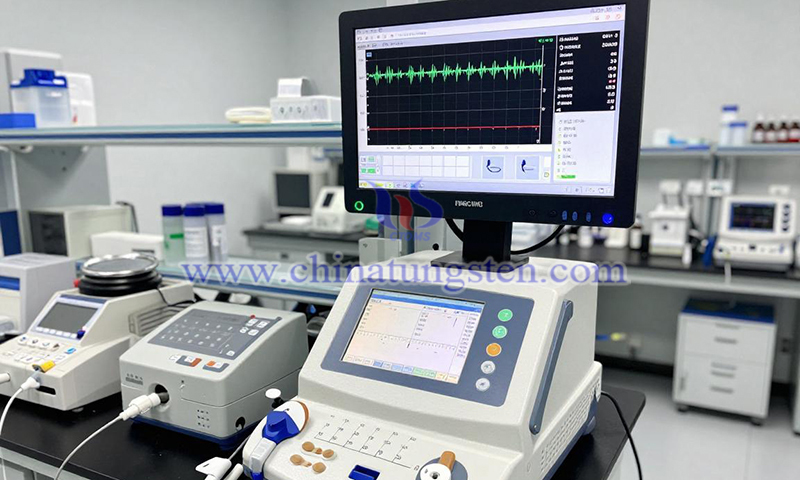
Tungsten needle in Microinjection (MI) is used to inject reagents into single cells or microstructures, requiring ultra-fine tips, stable conductivity, and high strength. Tip size can be controlled from nano- to submicron scale for minimal resistance and high precision. High rigidity and chemical inertness prevent deformation or corrosion in biological environments. Precision processing and surface cleaning enable repeatable injection and accurate reagent delivery with reduced cell damage.
5. Tungsten Needle for Electromyography (EMG)Tungsten needle used in Electromyography (EMG) is inserted into muscle tissue to acquire millivolt-level electrical signals, requiring high conductivity, chemical stability, and biocompatibility. Tungsten needle maintains stable performance under physiological conditions, resisting oxidation and interface degradation. Its stable conductivity ensures low contact impedance and clear signal output. Surface optimization improves insertion performance and long-term durability.
6. Tungsten Needle for BCI (Brain-Computer Interface)Tungsten needle in Brain-Computer Interface (BCI) systems is used for high-precision neural signal acquisition and stimulation, requiring miniaturized tips, stable signals, and excellent mechanical properties. High stiffness ensures stable insertion into cortical or deep brain regions without deformation. Uniform grain structure and low resistance improve multi-channel signal consistency. CTIA enhances long-term stability through precision processing and surface treatment.
7. Tungsten Needle for MEA (Microelectrode Array)Tungsten needle used in Microelectrode Array (MEA) systems enables multi-channel neural or cellular signal acquisition, requiring consistent diameter, fine tips, and uniform conductivity. High-purity materials and optimized microstructure provide nano-scale tips with excellent rigidity. Chemical inertness and structural stability prevent deformation or performance drift during long-term use, improving signal consistency and experimental comparability.
Across neural electrodes, signal recording, single-cell puncture, microinjection, electromyography, Brain-Computer Interface, and microelectrode arrays, tungsten needle delivers long-term reliability, signal stability, and operational precision through high strength, high elastic modulus, low resistivity, and refined tip geometry. Leveraging high-purity materials, crystallographic optimization, precision tip fabrication, and surface treatment, CTIA provides stable and reliable tungsten needle solutions for biomedical research, neural engineering, and advanced micro-manipulation applications.
For any inquiry, please contact tungsten needle manufacturer: CTIA GROUP
Email: sales@chinatungsten.com
Tel: 0086 592 5129696 / 0086 592 5129595
Website: www.tungsten.com.cn
WeChat:

More info>>