
Manufacturing Process of Tungsten Plate
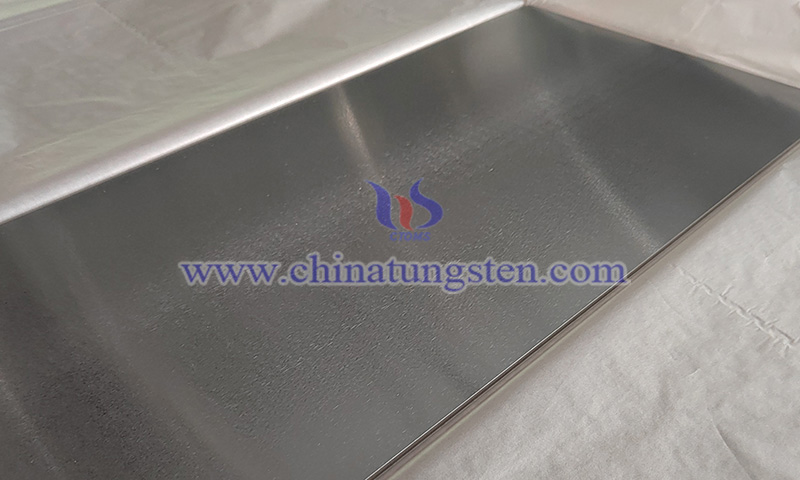
Tungsten plate is produced using a mature and stable powder metallurgy route. The core of this manufacturing process lies in the preparation of high-purity tungsten powder and precise high-temperature densification control. The entire production procedure is strictly managed to ensure high purity, high density, and excellent high-temperature performance. The manufacturing process of CTIA tungsten plate is outlined below.
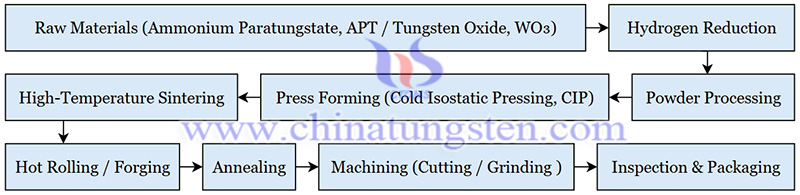
1. Tungsten Powder PreparationProduction begins with ammonium paratungstate (Ammonium Paratungstate, APT) or tungsten trioxide (WO₃) as the raw material. These materials undergo staged hydrogen reduction in a high-purity hydrogen atmosphere to produce metallic tungsten powder. By precisely controlling the reduction temperature, atmosphere purity, and holding time, oxygen content can be minimized and particle size distribution can be controlled, ensuring a tungsten powder purity of ≥99.95% and providing a stable raw material basis for subsequent forming and sintering.
2. Powder Treatment and HomogenizationThe reduced tungsten powder is subjected to sieving, homogenized mixing, and drying to improve powder flowability and particle size consistency. This step helps prevent local density variations and creates favorable conditions for pressing.
3. Press FormingDepending on the product specification, die pressing or Cold Isostatic Pressing (Cold Isostatic Pressing, CIP) is used to form the material. High pressure of approximately 200–400 MPa compacts the powder into a green body with sufficient strength. At this stage, density uniformity is carefully controlled to avoid internal cracks or delamination defects.
4. High-Temperature SinteringThe green compact is sintered at high temperature (around 2000 °C) in a vacuum or hydrogen protective atmosphere. Through solid-state diffusion, the powder particles metallurgically bond together, eliminating pores and significantly increasing densification. After sintering, the material strength and structural stability are greatly improved.
5. High-Temperature Thermomechanical Processing (Hot Rolling / Hot Forging)Tungsten is a refractory and relatively brittle metal, so deformation must occur above its recrystallization temperature (typically 1200–1600 °C). Multiple passes of hot rolling or hot forging are performed to further densify the material, refine the grain structure, and improve microstructural uniformity. This process increases the density close to the theoretical value of 19.3 g/cm³ while enhancing mechanical properties.
6. Annealing TreatmentAfter thermomechanical processing, vacuum annealing is carried out to relieve internal stresses, stabilize the crystal structure, and improve ductility and dimensional stability.
7. Precision Machining and Quality InspectionAccording to customer requirements, finishing processes such as leveling, cutting, grinding, and polishing are performed to achieve the required dimensional accuracy and surface roughness. Final inspections include purity testing, density measurement, microstructure analysis, and nondestructive testing before the products are approved for delivery.
Manufacturing Process Flow of CTIA Tungsten PlateAs a professional pure tungsten plate manufacturer, CTIA GROUP adopts a mature powder metallurgy production route and implements full-process manufacturing and quality control from raw material reduction to finished product delivery, ensuring that product purity, density, and microstructure meet the requirements of high-end applications. The tungsten plate manufacturing process flow of CTIA GROUP is shown below.
For any inquiry, please contact tungsten plate manufacturer: CTIA GROUP
Email: sales@chinatungsten.com
Tel: 0086 592 5129696 / 0086 592 5129595
Website: www.tungsten.com.cn
WeChat:

More info>>