
CTIA Tungsten Plate Applied to Radioactive Medicine
Tungsten plate is assuming an increasingly vital role in modern radioactive medicine. In contemporary diagnostic and therapeutic systems that rely on ionizing radiation — including high-energy X-rays, gamma rays, and high-energy electron beams — structural materials must deliver not only superior radiation shielding performance but also exceptional long-term dimensional stability and structural reliability under the combined stresses of prolonged irradiation, thermal loading, and mechanical forces.
Moreover, the stringent requirements of the medical environment demand materials with outstanding environmental compatibility, biological safety, and high machining precision. In this context, tungsten plates stand out as a key functional material for high-end radiation medical equipment, thanks to their high atomic number (Z=74), exceptional density (19.3 g/cm³), extremely high melting point (3422°C), and excellent overall mechanical properties.
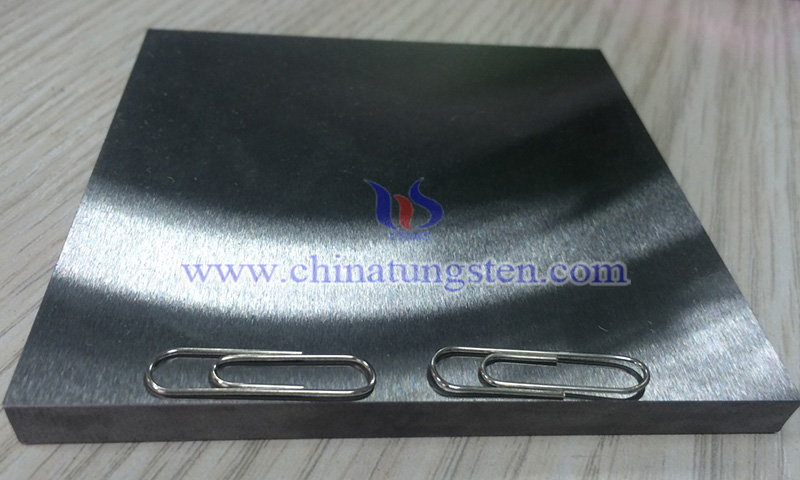
In CT (Computed Tomography) and various X-ray imaging systems, multi-level protection structures are required inside the equipment to limit radiation leakage and protect operators and the surrounding environment. CTIA tungsten plates are commonly used in protective layers around the X-ray tube, shielding plates behind the detector, and localized reinforced protective structures inside the equipment housing.
Due to tungsten's high atomic number and significant photoelectric absorption effect, it exhibits a high linear attenuation coefficient in the medium-to-low energy X-ray range. Under the same shielding level, the required thickness of tungsten plates is typically less than that of traditional lead materials, which helps reduce the overall equipment volume, lower structural weight, and optimize internal space layout. This is particularly important for high-end helical CT and multi-slice detector systems.
CT systems generate localized heat accumulation during high-frequency continuous scanning. With a melting point as high as 3422°C, tungsten maintains high strength and rigidity at elevated temperatures and is less prone to plastic deformation or dimensional shifts due to thermal stress. Tungsten's thermal conductivity also helps mitigate local temperature rises, improving equipment operational stability.
From an environmental and safety perspective, tungsten materials are free of toxic elements such as lead, eliminating the risk of environmental pollution during processing and disposal associated with lead materials. This better aligns with the green manufacturing and sustainable development trends of modern medical equipment, making it suitable for long-term continuous operation in high-end imaging systems. Additionally, in mobile or vehicle-mounted imaging systems, tungsten plates offer high shielding efficiency per unit volume, enabling higher protection levels in limited space and facilitating lightweight and modular equipment design.
2. Tungsten Plate for Collimator Components in Radiotherapy EquipmentIn radiotherapy systems such as Gamma Knife and medical linear accelerators, the spatial control precision of the radiation beam directly affects treatment efficacy and safety. The collimation system is used to confine and shape high-energy beams, concentrating radiation on the target lesion while maximizing protection of surrounding normal tissues.
CTIA tungsten plates are often machined into multi-aperture collimator plates or key absorbing leaf structures in Multi-Leaf Collimators (MLC). Thanks to tungsten's extremely high density and excellent radiation absorption capability, it effectively blocks leakage in non-target directions, achieving clearer dose boundary control.
In high-energy gamma ray or 6–15 MeV electron beam environments, tungsten materials exhibit stable physical absorption characteristics and can withstand high-dose irradiation over long periods without significant structural degradation. Their good mechanical strength and hardness help maintain the dimensional accuracy of collimation apertures, preventing dose distribution deviations caused by aperture changes.
Furthermore, tungsten's high elastic modulus of approximately 410 GPa provides greater structural stiffness during repeated opening/closing or micro-displacement control, reducing collimation errors due to structural deformation. This is especially critical for high-precision treatment modes such as precise radiotherapy, Intensity Modulated Radiation Therapy (IMRT), and Stereotactic Radiotherapy (SRT).
3. Tungsten Plate for Collimation Structures in Nuclear Medicine Imaging EquipmentIn PET (Positron Emission Tomography) and SPECT (Single Photon Emission Computed Tomography) systems, collimators are typically placed in front of the detector to restrict the direction of gamma ray incidence. Collimation precision directly impacts image spatial resolution and signal-to-noise ratio.
Tungsten plates can be machined into multi-aperture parallel-hole collimator plates, pinhole collimators, or septa structures. Due to their high atomic number and density, they provide higher radiation absorption efficiency at the same thickness, effectively suppressing scattered photons from entering the detector, thereby reducing background noise and improving image contrast.
Under long-term irradiation, tungsten's high strength and high modulus help maintain the geometric precision of collimation apertures, minimizing the impact of aperture expansion or deformation on imaging resolution. This is particularly significant in high-resolution small-animal PET systems or high-end clinical SPECT systems, where tungsten collimation structures can substantially enhance imaging stability.
4. Tungsten Plate for Radiation Protection Doors and Mobile Protective ScreensIn nuclear medicine departments, radiotherapy rooms, and interventional operating rooms, localized high-level protective screens or doors are often required. Tungsten plates can serve as the core shielding layer inside protection doors, achieving the required protection while reducing overall thickness.
Compared to traditional lead plates, tungsten enables thinner structural designs at the same protection level, making it suitable for space-constrained scenarios or those requiring structural strength. Tungsten's high hardness also reduces the risk of plastic flow, lowering deformation risks during long-term use. In mobile protective screens or adjustable protective partitions, tungsten plates can be combined with steel structures or composites to form high-strength composite protective assemblies, extending overall service life.
5. Tungsten Plate for Liners in Radioactive Source Storage and Transport ContainersDuring the storage and transport of medical radioactive sources such as cobalt sources or radionuclides, highly reliable shielding structures are essential. CTIA tungsten plates can be used as liner materials in source storage tanks or transport containers to enhance gamma ray shielding efficiency. Due to tungsten's high density, high protection levels can be achieved in limited volumes, making it suitable for space-constrained mobile treatment units or source replacement systems. Its high strength and radiation resistance ensure structural integrity during long-term use, improving the safety of radioactive source management.
6. Tungsten Plate for Absorption Structures in Proton Therapy and Heavy Ion Therapy SystemsIn advanced proton therapy and heavy ion therapy systems, beam terminal absorbers and secondary scatter control structures require high density and excellent heat resistance. CTIA tungsten plates can be used in beam absorption blocks or localized shielding structures to absorb excess particle energy and restrict scatter directions. Their high melting point and good thermal stability allow them to maintain structural integrity under short-duration high-energy particle impacts, preventing material ablation or crack propagation and thereby ensuring the safe operation of the treatment system.
The applications of tungsten plates in the field of radiation medicine now cover multiple key areas, including medical imaging protection structures, radiotherapy collimation systems, nuclear medicine imaging collimation components, protection doors and mobile protective screens, radioactive source storage/transport liners, and absorption structures in high-energy particle therapy systems. Their core advantages lie in high atomic number, high density, high melting point, high strength, and excellent long-term irradiation stability.
As precision medicine and advanced radiotherapy technologies continue to develop, requirements for material dimensional stability, processing precision, and environmental performance will keep rising. Tungsten plates, as high-performance radiation shielding and structural materials, will maintain their important position in the future manufacturing of high-end medical equipment, providing reliable support for safe, precise, and efficient radiation medical systems.
For any inquiry, please contact tungsten plate manufacturer: CTIA GROUP
Email: sales@chinatungsten.com
Tel: 0086 592 5129696 / 0086 592 5129595
Website: www.tungsten.com.cn
WeChat:

More info>>