
Applications of Tungsten Plate
Tungsten plate, as a typical refractory metal structural material, has extensive application value in extreme operating environments such as high temperature, high-energy particle beams, high current density, and strong radiation. Owing to its high melting point, low vapor pressure, excellent thermal conductivity, and dimensional stability at elevated temperatures, tungsten plate has gradually become one of the important functional materials in advanced manufacturing, energy engineering, scientific research facilities, and specialized equipment.
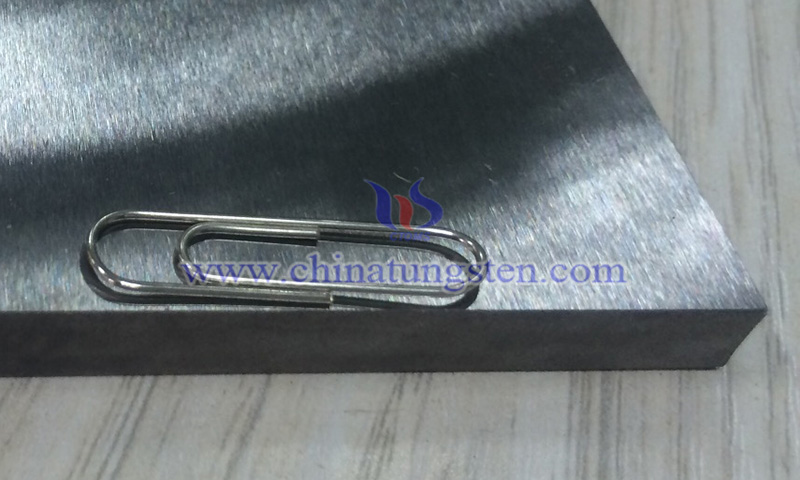
In semiconductor manufacturing equipment, materials must possess high purity, low vapor pressure, and excellent high-temperature stability to prevent contamination of the process environment and ensure long-term stable operation. CTIA GROUP tungsten plates, with their high melting point, low vapor pressure, and good vacuum compatibility, are commonly used in sputtering targets (Physical Vapor Deposition, PVD), ion implantation equipment components, Chemical Vapor Deposition/Plasma Enhanced Chemical Vapor Deposition (CVD/PECVD) reaction chamber components, dry etching equipment protection components, and carrier plates for electron beam evaporation systems.
2. CTIA Tungsten Plate Applied to High Temperature Industrial FurnaceHigh-temperature industrial furnaces are widely used in powder metallurgy, vacuum sintering, single crystal growth, and high-temperature heat treatment. Tungsten plate has a high melting point of 3422°C, low vapor pressure, and excellent dimensional stability at high temperatures. It can still maintain high strength above 2000°C, making it widely used in vacuum furnace hot-zone systems, sapphire and single-crystal silicon growth equipment, Metal-Organic Chemical Vapor Deposition (MOCVD) equipment structural components, as well as internal parts of high-temperature sintering furnaces and vacuum brazing furnaces.
3. CTIA Tungsten Plate Applied to Nuclear Fusion EnergyNuclear and fusion engineering facilities operate for long periods under high heat flux and particle irradiation environments, requiring materials with excellent sputtering resistance, thermal conductivity, and structural stability. Tungsten, due to its high melting point, low vapor pressure, and low sputtering yield, is considered an important candidate material in fusion engineering. Tungsten plates can be used for the first wall of fusion reactors, divertor heat-sink structures, radiation shielding components of nuclear reactors, and high-energy beam terminal structures.
4. CTIA Tungsten Plate Applied to Radioactive MedicineIn medical imaging and radiation therapy equipment, structural materials must have good radiation absorption capability and structural stability. Tungsten has a high atomic number and density, providing effective shielding against X-rays and gamma rays. Therefore, CTIA tungsten plates are commonly used in protective structures of medical imaging equipment, collimator assemblies in radiotherapy systems, shielding structures in nuclear medicine imaging systems, and inner linings of radioactive source storage and transportation containers.
5. CTIA Tungsten Plate Applied to Aerospace High Temperature StructuresAerospace systems often encounter environments with high heat flux density and thermal shock during operation. Tungsten can maintain high strength above 2000°C and has excellent ablation resistance. Therefore, tungsten plates can be used for high-temperature structural components in rocket engines, thermal protection panels for hypersonic vehicles, locally reinforced structures in reentry vehicles, and components in space electric propulsion systems.
6. CTIA Tungsten Plate Applied to Electronic Vacuum and Electro Optical SourceElectronic vacuum devices and high-power light source systems typically operate under high current density and high vacuum conditions, requiring materials with strong resistance to arc erosion and excellent thermal stability. CTIA tungsten plates, with their high melting point, low vapor pressure, and good thermal conductivity, can be used for electron tube anode plates, X-ray tube anode targets, protective plates for high-power laser systems, and electrode structures for discharge light sources.
7. CTIA Tungsten Plate Applied to Electrical Discharge MachiningIn high-energy processing technologies such as Electrical Discharge Machining (Electrical Discharge Machining, EDM) and plasma welding, electrode materials must have good electrical conductivity and resistance to electrical erosion. With its high melting point and high thermal conductivity, tungsten plate can maintain structural stability under transient high-energy thermal loads and can be machined into discharge electrode plates, welding electrode substrates, and auxiliary structures for additive manufacturing.
8. CTIA Tungsten Plate Applied to Military and Special ApplicationsIn certain military equipment and specialized engineering systems, structural materials must combine high density, high-temperature stability, and impact resistance. Tungsten plates, with their high density and high melting point, can be used for high-density structural components, electromagnetic and radiation shielding components, and structural parts exposed to high-temperature jet environments.
9. CTIA Tungsten Plate Applied to Anti-Corrosive EnvironmentsIn some high-temperature chemical processing equipment, materials must withstand both corrosive media and thermal loads. CTIA tungsten plates can maintain good strength and structural stability under high temperatures and can be used for high-temperature reactor linings, molten metal isolation plates, and structural components in molten salt environments.
10. CTIA Tungsten Plate Applied to Scientific ResearchIn experimental platforms for high-energy physics, plasma physics, and materials science, experimental devices often involve environments with high temperature, high current density, and particle beam bombardment. Due to its high melting point and excellent thermal stability, tungsten plate is commonly used for plasma experiment electrode plates, high-temperature testing support structures, particle beam absorption plates, and structural components in vacuum high-temperature simulation platforms.
11. CTIA Tungsten Plate Applied to Lighting IndustryIn high-power discharge light sources, specialized arc light sources, and high-energy radiation source systems, internal components operate for long periods under high temperature and arc impact conditions. CTIA tungsten plates, with their high melting point, low vapor pressure, and excellent arc erosion resistance, can be used for high-temperature internal structural components in high-power discharge lamps, structural plates for specialized arc light sources, X-ray source anode targets, and reflective structural components in high-power lighting systems.
For any inquiry, please contact tungsten plate manufacturer: CTIA GROUP
Email: sales@chinatungsten.com
Tel: 0086 592 5129696 / 0086 592 5129595
Website: www.tungsten.com.cn
WeChat:

More info>>