
CTIA Tungsten Plate Applied to High Temperature Furnace
High temperature furnace systems form the backbone of advanced material manufacturing and semiconductor process equipment, demanding materials that can endure extreme thermal and mechanical stresses. In these systems, tungsten plate is widely used for critical structural and load-bearing components due to its exceptional high-temperature performance.
Tungsten plate offers an ultra-high melting point (3422 °C), excellent thermal conductivity (~170 W/m·K), low vapor pressure (<10⁻⁶ Pa), high elastic modulus (~410 GPa), and outstanding creep resistance, making it particularly suited for harsh furnace environments.
Compared with graphite, molybdenum, and nickel-based high-temperature alloys, tungsten maintains superior strength and dimensional stability above 2000 °C, while minimizing material volatilization in high-vacuum conditions. These combined properties make tungsten plate an ideal choice for constructing ultra-high-temperature thermal field systems and essential load-bearing structures.
Drawing on CTIA GROUP’s extensive experience with high-temperature furnace applications, the key considerations for material selection include long-term dimensional stability, the impact of purity on process atmospheres, and batch consistency to ensure product yield. Tungsten plates with high density, low impurity content, and uniform microstructure effectively meet these requirements in practice.
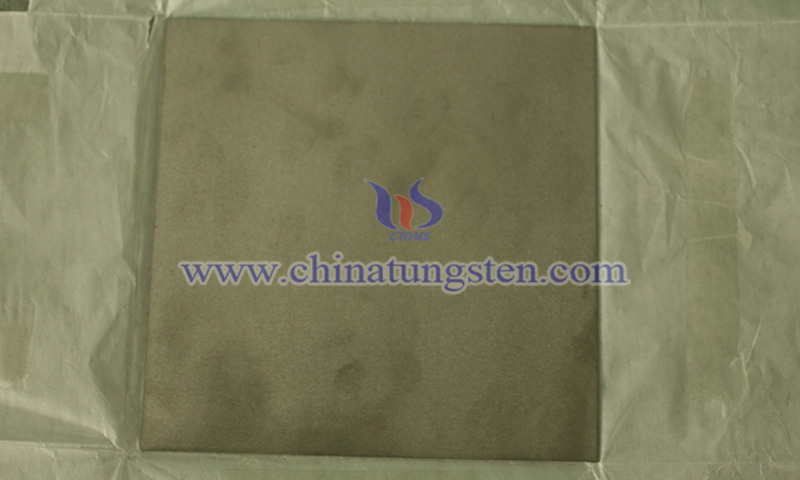
Vacuum furnaces are widely used for refractory metal sintering, cemented carbide densification, ceramic material preparation, and single crystal growth. Their thermal field systems typically include multi-layer thermal shields, thermal reflectors, heating chamber linings, and supporting structures. The core objective of thermal field design is to improve thermal efficiency, optimize temperature field uniformity, and reduce energy consumption.
Under high vacuum conditions, heat transfer mainly occurs through radiation. Tungsten plates exhibit excellent infrared reflectivity at high temperatures and can serve as multi-layer thermal shield materials to significantly reduce radiative heat loss. A multi-layer tungsten thermal shield structure can reduce heat loss by 20%–40%, effectively improving furnace energy efficiency.
The high thermal conductivity of tungsten helps rapidly balance local heat flux density, reducing temperature field fluctuations and allowing furnace temperature uniformity to be controlled within ±5 °C or even smaller ranges. For advanced powder metallurgy sintering processes, temperature uniformity directly affects grain growth kinetics and the final material density.
Tungsten’s extremely low vapor pressure is particularly important under ultra-high vacuum conditions (10⁻⁴–10⁻⁶ Pa). Compared with graphite materials that may release gases or particles, tungsten plates produce almost no volatile contaminants at high temperatures, helping maintain furnace chamber cleanliness. This low-contamination characteristic is especially critical during heat treatment of semiconductor-grade materials.
From a mechanical perspective, tungsten has a thermal expansion coefficient of approximately 4.5 × 10⁻⁶/K, much lower than most high-temperature alloys. This results in minimal dimensional change during repeated heating and cooling cycles, reducing structural stress concentration. Its high elastic modulus and creep resistance ensure that the structure remains rigid even during long-term operation at 2000 °C, extending furnace service life and reducing maintenance costs.
2. Tungsten Plate for Sapphire and Single-Crystal Silicon Growth EquipmentIn sapphire crystal and single-crystal silicon growth equipment, thermal field stability and material purity directly determine crystal quality. Typical processes include the Czochralski method (Czochralski, CZ), Float Zone method (Float Zone, FZ), and the Kyropoulos method. These processes generally operate within temperature ranges from 1400 °C to 2100 °C, placing extremely high demands on thermal field materials.
In such equipment, CTIA tungsten plates are mainly used as heat-conducting base plates, thermal reflectors, and crucible support structures. Tungsten’s excellent thermal conductivity helps optimize heat flow distribution, stabilize the melt interface, and reduce thermal stress gradients.
During single-crystal silicon pulling, the temperature difference at the solid-liquid interface typically needs to be controlled within ±1 °C. The use of tungsten plates in thermal field structures helps reduce radial temperature differences, lower dislocation density, and improve internal crystal stress distribution.
High-purity tungsten exhibits extremely low evaporation rates at high temperatures and has weak chemical reactivity with molten silicon or alumina melts, making it less likely to introduce metallic impurities. Compared with graphite materials that may release carbon impurities, tungsten is more favorable for controlling impurity concentrations in crystals and improving resistivity uniformity and minority carrier lifetime in semiconductor-grade silicon wafers.
Large-diameter single-crystal growth requires extremely stable structural support. Tungsten plates, with high density (19.3 g/cm³) and high strength, can provide stable support for large crucibles, preventing axis deviation caused by high-temperature creep. Their low thermal expansion characteristics also help maintain axial stability during crystal growth and improve production yield.
3. Tungsten Plate for Metal Organic Chemical Vapor Deposition (MOCVD) Epitaxy Equipment ComponentsMetal Organic Chemical Vapor Deposition (MOCVD) is a key technology for manufacturing epitaxial layers of gallium nitride (GaN), gallium arsenide (GaAs), and silicon carbide (SiC). Reaction chambers typically operate at temperatures of 1000–1150 °C and involve atmospheres containing high-purity hydrogen, ammonia, and organometallic precursors.
In MOCVD equipment, CTIA tungsten plates are mainly used as high-temperature reflectors and chamber lining structures. Their high melting point and low vapor pressure allow them to operate stably for long periods in high-temperature reaction atmospheres without significant volatilization.
Tungsten also shows better chemical stability in hydrogen environments than many nickel-based or cobalt-based alloys, reducing the risks of hydrogen embrittlement and surface corrosion.
Epitaxial growth is extremely sensitive to temperature field uniformity. Wafer thickness uniformity deviations usually must be controlled within ±2%. The excellent thermal conductivity and heat reflection properties of tungsten plates help optimize chamber temperature distribution, reducing edge effects and local overheating.
Their high elastic modulus and low creep rate maintain chamber structural precision and reduce geometric deviations caused by long-term operation, thereby improving equipment repeatability and batch consistency. During repeated high-temperature start-stop cycles, tungsten plates also exhibit excellent thermal shock resistance, tolerating rapid heating and cooling without cracking. Stable structural performance helps extend maintenance cycles and reduce production downtime costs.
4. Tungsten Plate for Structural Components in High-Temperature Sintering and Heat Treatment FurnacesIn sintering processes for carbides, nitrides, and refractory metal materials, temperatures typically range from 1600 °C to 2200 °C. Within this temperature range, CTIA tungsten plates maintain relatively high yield strength and structural stability, making them suitable for load-bearing trays, heating element supports, and insulation structures.
Tungsten’s creep resistance at 2000 °C is significantly superior to heat-resistant steels and nickel-based high-temperature alloys. Its low thermal expansion reduces stress accumulation during thermal cycling, improving furnace sealing performance and structural reliability.
In vacuum or inert atmospheres, tungsten has an extremely low oxidation rate, helping maintain furnace chamber cleanliness. Surface coatings such as aluminum oxide (Al₂O₃) or yttrium oxide (Y₂O₃) can further improve oxidation resistance, allowing tungsten plates to operate in more complex atmospheres. Composite structural designs can balance strength, corrosion resistance, and service life to meet the needs of advanced manufacturing.
5. Tungsten Plate for Ultra-High-Temperature Vacuum Brazing FurnacesVacuum brazing furnaces are commonly used for joining aerospace engine blades, heat exchangers, and high-end electronic packaging components. Typical operating temperatures range from 1000 °C to 1500 °C, while some specialized brazing systems may exceed 1800 °C. Brazing processes require extremely high furnace atmosphere purity and temperature uniformity.
In brazing furnaces, CTIA tungsten plates are mainly used as thermal reflectors, heating zone partitions, and load-bearing supports. Due to tungsten’s low vapor pressure (<10⁻⁶ Pa), it produces almost no volatilization contamination under high vacuum conditions (10⁻³–10⁻⁵ Pa), helping prevent inclusions or pores in brazed joints.
The high thermal conductivity of tungsten also helps balance temperature gradients in the brazing area, preventing abnormal filler metal flow caused by localized overheating. Tungsten’s high-temperature creep resistance ensures that support structures remain straight during long-term use, maintaining component positioning accuracy and improving brazing consistency.
6. Tungsten Plate for Structural Components in Hot Isostatic Pressing (HIP) FurnacesHot Isostatic Pressing (HIP) technology is widely used in advanced powder metallurgy and additive manufacturing post-processing. Operating temperatures typically range from 1200 °C to 2000 °C, accompanied by isostatic pressures of up to 100–200 MPa.
Inside HIP furnaces, CTIA tungsten plates can be used in high-temperature insulation layers, thermal shields, and localized support components. Tungsten maintains good strength and structural stability under high temperature and high pressure conditions. Its high density and high modulus help maintain structural integrity.
Compared with graphite materials that may deform or pulverize under high pressure, tungsten plates offer more stable structural performance. In addition, tungsten exhibits good stability in hydrogen and inert gas environments, reducing the risk of gas-material reactions and improving equipment safety and reliability.
7. Tungsten Plate for Temperature Equalization Structures in Vacuum Heat Treatment FurnacesIn vacuum heat treatment of high-end tool steels, aerospace alloys, and special tool steels, temperature uniformity directly affects microstructure and hardness distribution.
CTIA tungsten plates can be used as temperature equalizing plates or heat distribution plates inside furnace chambers. By optimizing plate thickness and structural layout, the radiation path within the furnace can be improved, reducing temperature dead zones.
The high thermal conductivity of tungsten allows heat to spread rapidly across the plate surface, effectively shortening heating time and reducing temperature differences between batches, thereby improving product consistency.
The value of tungsten plate in high-temperature industrial furnace systems is not limited to its high-temperature resistance alone. It also lies in its ability to regulate temperature fields, maintain structural stability, control contamination, and ensure long-term operational reliability.
As advanced manufacturing continues to evolve toward higher temperatures, larger crystal sizes, more complex epitaxial structures, and higher material purity, tungsten plates will play an increasingly important strategic role in ultra-high-temperature thermal field systems. For high-end manufacturing, tungsten plates are not only refractory materials but also key structural materials that enable high efficiency, high precision, and high reliability in high-temperature industrial furnace systems.
For any inquiry, please contact tungsten plate manufacturer: CTIA GROUP
Email: sales@chinatungsten.com
Tel: 0086 592 5129696 / 0086 592 5129595
Website: www.tungsten.com.cn
WeChat:

More info>>