
CTIA Tungsten Plate Applied to Electrical Discharge Machining
Tungsten plate holds significant application value in electrical discharge machining and special manufacturing fields. These technologies typically rely on high-energy-density principles, including pulse discharge, arc discharge, plasma, electron beam, or high-frequency current. Such processes impose comprehensive demands on electrode materials and structural components, including high-temperature resistance, anti-erosion performance, thermal shock resistance, and dimensional stability.
As a high-melting-point metal with a melting point of 3422°C, thermal conductivity of approximately 170 W/m·K, and elastic modulus of about 410 GPa, tungsten exhibits excellent stability under high-energy transient thermal loads, making it one of the ideal materials to meet these stringent requirements.
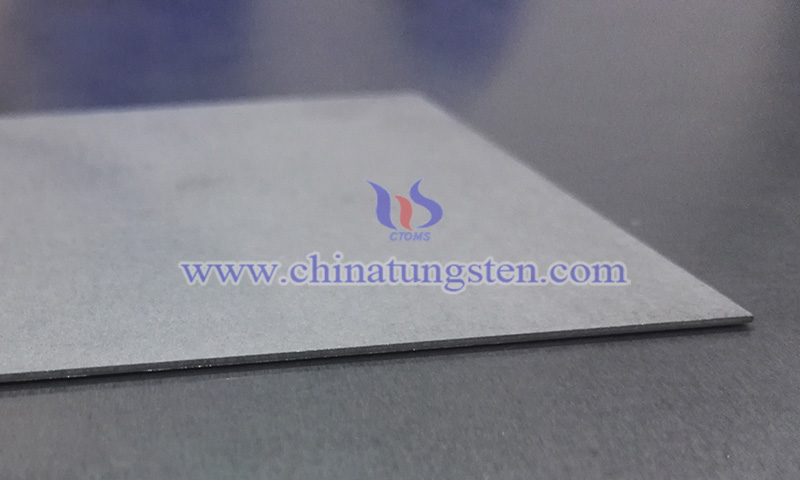
In precision mold manufacturing, micro-hole drilling, and complex cavity forming, EDM technology uses pulse discharge to generate instantaneous high-temperature plasma, locally melting and vaporizing the workpiece. Discharge channel temperatures can exceed 8000°C, requiring electrode materials to withstand frequent thermal shock and electrical erosion.
Tungsten plates, due to their ultra-high melting point, resist melting erosion, edge collapse, or breakdown under discharge thermal loads, helping maintain stable electrode end-face geometry. Compared to copper or graphite electrodes, tungsten offers significantly lower erosion loss in high-precision micro-machining, making it especially suitable for small-diameter micro-holes, narrow slots, and high aspect-ratio structures.
Its relatively high thermal conductivity rapidly dissipates discharge-generated heat, reducing thermal deformation from localized temperature rise and improving dimensional consistency. The high hardness and elastic modulus ensure shape stability under prolonged pulse impacts, minimizing end-face wear rates.
In precision connector micro-holes, fuel injector nozzle arrays, micro-structure mold cavities, and complex 3D electrode machining, tungsten plates can be fabricated into thin sheets or composite electrode substrates, enhancing machining accuracy and surface quality. For ultra-precision applications, tungsten-copper composites balance conductivity and erosion resistance.
2. Tungsten Plate for Plasma Welding Electrode StructureIn Plasma Arc Welding (PAW) and high-energy arc welding systems, electrode regions endure long-term exposure to high-temperature arcs and intense current density, with arc temperatures exceeding 10000°C, demanding exceptional anti-ablation performance.
CTIA tungsten plates, with superior high-temperature and ablation resistance, are commonly used for internal electrode support structures or fixing plates in plasma welding torches. Their high melting point prevents melting or deformation under sustained arc action, maintaining arc stability.
Under high current density, electrode surfaces face ion bombardment and metal evaporation erosion. Tungsten’s superior arc erosion resistance extends electrode service life and reduces replacement frequency compared to most conventional metals.
Additionally, tungsten offers good corrosion resistance and stability in high-temperature atmospheres or shielding gases. Its high strength and rigidity maintain electrode positioning accuracy, improving arc focus and weld bead quality.
3. Tungsten Plate for Resistance Welding and High-Frequency Induction Heating Electrode SubstratesIn resistance welding and high-frequency induction heating systems, electrode regions experience periodic current impacts, localized high temperatures, repeated thermal cycling, and superimposed mechanical pressure. Instantaneous resistive heat at the contact interface causes rapid temperature rise, accompanied by compressive stress and material softening risks.
CTIA tungsten plates serve as electrode substrates or localized wear-resistant layers, enhancing overall deformation resistance and thermal stability. Tungsten’s high yield strength and creep resistance at elevated temperatures effectively suppress end-face collapse or plastic flow, reducing weld nugget profile variation and ensuring consistent weld quality.
In precision electronic device welding or micro-structure joining, electrode face dimensional errors directly affect current density distribution. Tungsten’s high hardness and elastic modulus maintain contact surface geometry, minimizing process deviations from wear. Its good thermal conductivity disperses localized heat quickly, lowering the probability of cracking or spalling in concentrated areas.
In high-frequency induction heating systems, tungsten plates are also used for high-temperature supports or shielding structures to confine heat field diffusion, optimize temperature uniformity in the heating zone, and improve forming or welding process controllability.
4. Tungsten Plate for Auxiliary Structures in Electron Beam and Laser Additive ManufacturingIn Electron Beam Additive Manufacturing (EBAM) and High-Energy Laser Additive Manufacturing (LAM), localized melt pools form with severe temperature gradients. Substrates and support structures must withstand rapid heating-cooling cycles. CTIA tungsten plates serve as heat-resistant liners or base support plates to absorb excess heat and limit heat-affected zone expansion. Their high melting point ensures structural integrity under sustained high-energy beam exposure, preventing collapse or deformation from overheating.
Tungsten’s low vapor pressure minimizes evaporation contamination, maintaining processing chamber cleanliness—especially critical in vacuum electron beam processes. In cases of beam misalignment or abnormal impact, tungsten plates act as safety buffers to protect the main platform or vacuum chamber walls. They can also function as localized thermal shields or reflectors, optimizing heat flow paths to improve interlayer bonding stability and reduce residual stress accumulation.
5. Tungsten Plate for Localized Reinforcement in High-Temperature MoldIn hot pressing, high-temperature forging, and powder metallurgy hot-pressing processes, mold regions endure coupled high temperature and pressure, prone to wear, collapse, or surface cracking. Tungsten plates serve as localized reinforcement liners to enhance wear and compression resistance in critical areas.
Tungsten retains high hardness and strength at elevated temperatures, reducing cavity wear rates and preserving dimensional accuracy. Its thermal fatigue resistance mitigates crack propagation from cyclic temperature changes.
In complex cavity structures, tungsten plates can be used as replaceable wear-resistant inserts, allowing individual replacement of worn sections to lower overall mold maintenance costs. Composite structures with hot-work die steel or cemented carbide balance overall toughness with localized wear resistance, extending mold life and improving forming consistency.
The applications of CTIA tungsten plates in electrical machining and specialty manufacturing cover EDM electrode plates, plasma welding electrode structures, resistance/induction heating electrode substrates, additive manufacturing auxiliary structures, and high-temperature mold reinforcement components. Their core advantages include ultra-high melting point, low erosion loss rate, good thermal conductivity, high hardness, and excellent structural stability.
As precision manufacturing, micro-nano processing, and high-energy beam technologies continue to advance, requirements for electrode material dimensional stability and thermal shock resistance will keep rising. Tungsten plates, as high-performance high-temperature electrical machining materials, will continue to play a vital role in high-end specialty manufacturing systems.
For any inquiry, please contact tungsten plate manufacturer: CTIA GROUP
Email: sales@chinatungsten.com
Tel: 0086 592 5129696 / 0086 592 5129595
Website: www.tungsten.com.cn
WeChat:

More info>>