
CTIA Tungsten Plate Applied to Scientific Research
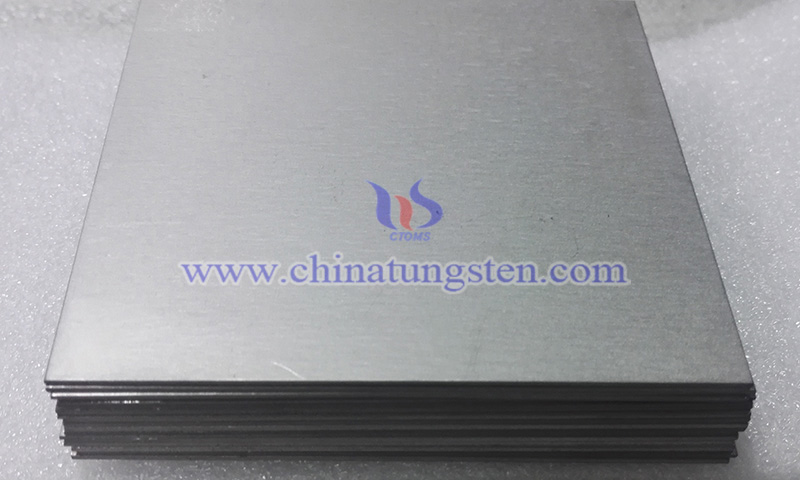
CTIA can supply tungsten plates with high density, low impurity content, and controllable grain size, specifically tailored to meet the stringent material performance requirements of advanced facilities in scientific research and experimental fields. In fields such as high-energy physics, plasma physics, materials science, and extreme environment simulation experiments, research platforms are typically subjected to complex conditions including high temperature, high current density, high-energy particle irradiation, strong electromagnetic fields, and rapid thermal cycling. These environments impose extremely high standards on material purity, dimensional stability, radiation resistance, and thermal stability, necessitating the selection of high-performance metallic materials capable of adapting to extreme conditions.
Tungsten (W), with a melting point of 3422°C, density of 19.3 g/cm³, elastic modulus of approximately 410 GPa, room-temperature thermal conductivity of about 170 W/m·K, and linear expansion coefficient of approximately 4.5×10⁻⁶/K, combines high-temperature strength with low vapor pressure. It maintains excellent structural and thermal stability even under the above extreme conditions, making tungsten plate a key choice for research-grade high-temperature structural components and electrode materials.
CTIA GROUP representatives have visited Tokamak fusion devices on-site and engaged in in-depth discussions with fusion experts and scholars on first-wall material selection, divertor heat load distribution, and plasma compatibility issues. Through analysis of actual device operation data and failure cases, a more systematic understanding of plasma experiment material applications was developed. The discussions confirmed that under high heat flux, high particle flux, and long-term irradiation conditions, electrode and first-wall materials must balance high-temperature stability, low sputtering yield, and controllable structural dimensions.
In plasma physics experiments — including magnetic confinement fusion devices, pulsed discharge systems, and high-power arc experiments — electrode plates must endure high current density impacts and plasma particle bombardment. Local current densities can exceed 10⁶ A/m², causing significant transient surface temperature rises along with ion sputtering and neutron irradiation effects. Experts noted that excessive material evaporation or sputtering directly compromises plasma purity and interferes with experimental parameter stability.
Based on this consensus, tungsten plate, with its 3422°C melting point and extremely low vapor pressure, resists melting or volatilization under high-temperature discharge conditions, effectively reducing material evaporation contamination risks to the plasma environment. Its high sputtering threshold energy results in lower material loss rates under ion bombardment, helping maintain electrode geometric morphology and minimizing sources of experimental error.
In practical applications on Tokamak and linear plasma experimental systems, tungsten is commonly used as a first-wall or divertor key material. Discussions further indicated that tungsten exhibits relatively slow lattice defect evolution under high-energy particle irradiation, with controllable dimensional changes and superior structural integrity compared to most conventional metals, contributing to extended component service life.
Moreover, tungsten’s relatively high thermal conductivity rapidly dissipates localized heat from arcs or discharges, reducing thermal stress concentration and thermal cracking risks. Using tungsten plate for electrode structures minimizes impurity interference with discharge characteristics, improving experimental data repeatability and reliability. These exchange outcomes also underscored the critical importance of high purity, uniform microstructure, and dense structure in research-grade tungsten plate applications.
2. Tungsten Plate for Ultra-High-Temperature Material Testing Support PlateIn ultra-high-temperature material testing platforms — such as high-temperature tensile testing, creep testing, laser heating experiments, and arc-heated environment simulation — test temperatures can exceed 2000°C. Support plate materials must maintain dimensional stability and resist softening or deformation under extreme thermal loads. Tungsten plate, with its 3422°C melting point, retains relatively high yield strength and creep resistance even in ultra-high-temperature environments. Its low coefficient of thermal expansion minimizes dimensional changes during thermal cycling, helping preserve geometric precision of the testing system.
In high-temperature mechanical testing, deformation of the support plate directly affects load transfer paths and stress distribution, thereby distorting experimental results. Tungsten plate’s high elastic modulus and structural stability ensure precise and reliable load transmission. In thermal testing — such as high-temperature thermal conductivity or emissivity measurements — the thermal stability and low volatility of the support material are especially critical. Tungsten’s low vapor pressure reduces material volatilization effects on vacuum levels at high temperatures, safeguarding test environment purity.
3. Tungsten Plate for High-Energy Beam and Particle Accelerator Experiment StructuresIn Electron Beam (EB) and Ion Beam (IB) experimental systems, materials must withstand high-energy beam impacts, transient high-temperature melt pool effects, and thermal stress cycling. At high power levels, beam power densities can reach 10⁷–10⁹ W/m², causing extremely rapid localized temperature rises and demanding exceptional ablation resistance and thermal stability.
Tungsten plate, with a melting point of 3422°C and density of 19.3 g/cm³, features extremely low vapor pressure and excellent high-temperature strength, resisting melting or volatilization under high-energy beam impacts and reducing evaporation contamination risks to the vacuum environment. Its high density improves energy deposition efficiency and shortens beam penetration depth, making it commonly used for beam dump absorption plates or protective liner structures.
Under ion bombardment, tungsten has a high sputtering threshold energy, resulting in relatively low surface loss rates and helping maintain structural geometric accuracy and experimental stability. At elevated temperatures, tungsten retains high elastic modulus and creep resistance, reducing deformation risks from repeated loading.
In particle accelerator experiments, tungsten’s high atomic number (Z=74) and density provide strong attenuation of gamma rays and high-energy particles, making it suitable for beam collimators and radiation shielding structures. Its high-temperature stability and radiation resistance help minimize structural degradation risks from prolonged irradiation.
In summary, the advantages of tungsten plate in high-energy beam and particle accelerator experiment structures are concentrated in its ultra-high melting point, high density, excellent thermal conductivity, and superior radiation stability, making it an important structural material for high-power beam experimental devices.
4. Tungsten Plate for Vacuum High-Temperature Environment Simulation PlatformsIn space materials experiments and vacuum high-temperature simulation devices, materials must operate stably under low-pressure, high-temperature conditions. Tungsten’s low vapor pressure prevents significant volatilization in high vacuum, avoiding contamination of the vacuum system. Tungsten plate can be used as heating platforms, thermal shields, or sample support structures. Its dimensional stability and high-temperature strength ensure structural precision through multiple thermal cycles.
The applications of tungsten plate in scientific research and experimental fields cover plasma physics electrode plates, ultra-high-temperature material testing support plates, high-energy beam absorption structures, and vacuum high-temperature simulation platforms. Its core advantages include ultra-high melting point, high current density carrying capacity, excellent radiation resistance, low vapor pressure, and good dimensional stability.
As frontier research facilities continue to advance toward higher energy densities and higher temperatures, tungsten plate, as a critical experimental structural material, will continue to provide essential support. Leveraging its tungsten plate preparation and precision machining capabilities, CTIA GROUP can deliver stable and reliable material solutions to research institutions and experimental platforms.
For any inquiry, please contact tungsten plate manufacturer: CTIA GROUP
Email: sales@chinatungsten.com
Tel: 0086 592 5129696 / 0086 592 5129595
Website: www.tungsten.com.cn
WeChat:

More info>>