
Tungsten Plate Applied to Nuclear Fusion Energy
Tungsten plate plays a critical role in the nuclear fusion energy systems, where materials must withstand extreme operating conditions. These systems operate continuously under high temperatures, intense heat flux, energetic particle bombardment, and strong radiation fields, placing stringent demands on structural materials.
Tungsten, a representative refractory metal, offers a melting point of 3422 °C, density of 19.3 g/cm³, and atomic number 74, providing exceptional high-temperature strength and thermal stability. Its low vapor pressure, low sputtering yield at elevated temperatures, and relatively low hydrogen isotope retention make it uniquely suited for advanced nuclear and fusion applications.
As fusion reactor engineering has advanced, tungsten plates have transitioned from experimental materials to essential engineering components, performing critical functions in multiple key structures and contributing to the stability, durability, and efficiency of nuclear and fusion energy systems.
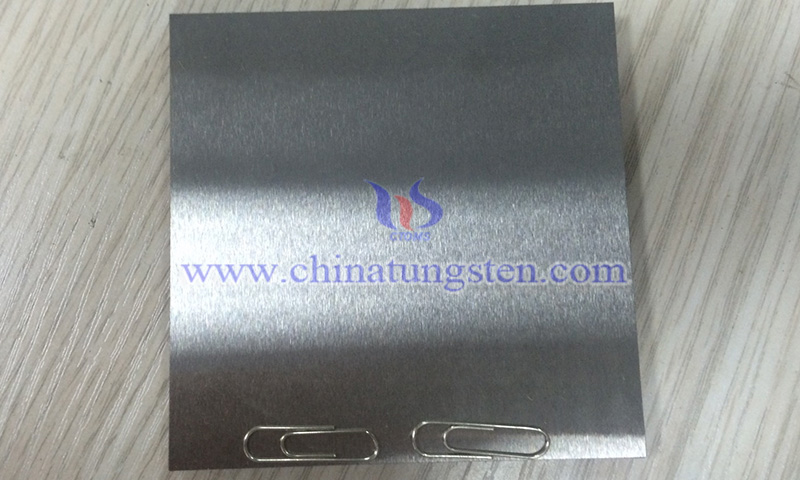
In magnetic confinement fusion devices, such as tokamak and stellarator systems, the first wall and divertor are the core regions directly facing the plasma. The First Wall plays a critical role in protecting the vacuum vessel structure and receiving particle heat flux, making it one of the most demanding components in the entire fusion system.
Plasma Facing Material (PFM) must withstand transient heat fluxes of 10–20 MW/m² or even higher, while resisting continuous bombardment from high-energy deuterium–tritium ions and neutrons. If the sputtering rate of the material is too high, impurities may enter the plasma core region, causing radiative cooling and reducing fusion efficiency.
Tungsten plates demonstrate clear advantages in such environments. Their sputtering yield is significantly lower than that of carbon-based materials and most refractory metals, allowing them to maintain a low material erosion rate under high-energy particle impact and thereby reduce the risk of impurity contamination.
The extremely high melting point of tungsten also provides a greater safety margin. Even during plasma disruptions or transient events such as Edge Localized Modes (ELM), tungsten is less likely to experience severe melting or structural failure.
In addition, tungsten has good thermal conductivity, enabling rapid transfer of heat absorbed at the surface to the rear cooling system, thereby reducing local temperature rise. With proper structural design and cooling channel configuration, tungsten plates can achieve stable operation under high heat flux conditions.
In the design of the International Thermonuclear Experimental Reactor (ITER), tungsten has been selected as a key candidate metal for divertor armor materials, and its engineering feasibility has been verified through extensive experiments. Although neutron irradiation may cause radiation hardening and dislocation evolution in tungsten, its overall structural stability remains superior to many alternative materials. Through grain refinement and alloying strategies, its radiation resistance can be further improved for long-term operation.
2. Tungsten Plate for Radiation Shielding Components in Nuclear ReactorsIn fission reactors and nuclear fuel cycle systems, radiation shielding is essential for ensuring personnel safety and reliable equipment operation. High-energy gamma rays and X-rays have strong penetrating ability, and insufficient protection may lead to severe impacts on equipment and the environment.
Due to its high atomic number and high density, tungsten plates exhibit excellent gamma-ray shielding performance. Under the same thickness conditions, tungsten has a significantly higher linear attenuation coefficient than lead, enabling more efficient radiation absorption.
At the same time, tungsten has much higher mechanical strength and temperature resistance than low-melting-point metals, meaning it does not soften or flow under elevated temperatures.
Tungsten plates are commonly used in gamma radiation shielding panels, reactor shielding structure linings, and the inner walls of nuclear waste storage containers. Dimensional stability is particularly important under high radiation exposure. Although tungsten may experience some degree of radiation-induced hardening during long-term irradiation, its overall structural integrity remains stable, with low risk of severe swelling or embrittlement.
Compared with conventional lead shielding materials, CTIA tungsten plates are more suitable for high-temperature and high-strength structural environments. Their combination of high density and high mechanical strength also provides significant advantages in nuclear facilities where installation space is limited.
3. Tungsten Plate for Fusion Divertor and Heat Sink StructuresThe divertor is one of the components in fusion devices that experiences the highest thermal load. Its main function is to guide and remove heat flux and impurity particles from the plasma edge.
The divertor surface directly faces high-energy plasma impacts, requiring materials with extremely high temperature resistance and thermal shock resistance.
CTIA tungsten plates are often used as the armor layer of divertor structures and are combined with copper alloy cooling structures to form tungsten–copper composite heat sink systems. In such structures, the tungsten layer withstands high temperatures and particle bombardment, while the copper-based material provides efficient heat conduction and internal cooling capability.
Through diffusion bonding or explosive bonding processes, reliable connections between the two materials can be achieved, ensuring strong interface bonding and efficient heat transfer.
Under short-term high heat flux density, tungsten exhibits excellent thermal fatigue resistance. Even under cyclic thermal shock conditions, its surface structure remains stable and is less likely to experience large-scale spalling or melting damage. By controlling grain size and microstructure, the resistance to crack propagation can be further improved.
4. Tungsten Plate for Structural Components in Advanced Fission Reactors and High-Temperature Gas-Cooled Reactors (HTGR)With the development of Generation IV nuclear reactor technologies, High Temperature Gas-cooled Reactor (HTGR) and fast neutron reactors require materials capable of operating under higher temperatures and stronger irradiation environments.
In high-temperature helium environments, materials must maintain excellent chemical stability. Tungsten plates show low oxidation rates and good structural stability in inert gas atmospheres, making them suitable for localized high-temperature structural components or high-temperature shielding assemblies.
In fast neutron environments, tungsten plates exhibit relatively low irradiation swelling and good dimensional stability. Although irradiation hardening and embrittlement may occur to some extent, microstructure optimization and processing improvements can mitigate performance degradation and enable tungsten to meet engineering application requirements.
5. Tungsten Plate for Nuclear Waste Processing and Storage SystemsIn nuclear waste encapsulation and dry storage systems, shielding capability and long-term structural stability are equally critical.
Tungsten plates can be used as inner linings or protective layers for containers storing high-level radioactive waste, improving overall radiation shielding efficiency.
Due to the high density of tungsten, effective shielding can be achieved with relatively limited thickness, making it suitable for applications where installation space or weight is restricted.
Tungsten also demonstrates good corrosion resistance in dry storage environments, allowing it to maintain structural integrity over long service periods and reduce maintenance requirements.
Even under complex temperature fluctuation conditions, tungsten plates maintain relatively low thermal expansion variation, helping preserve sealing performance and structural stability of containment systems.
6. Tungsten Plate for Plasma Experimental Devices and High-Energy Beam Target StructuresIn plasma experimental facilities and particle accelerator systems, beam dump plates and shielding components must withstand concentrated impacts from high-energy particle beams.
Due to its high density and high melting point, tungsten plates exhibit excellent kinetic energy absorption and thermal shock resistance.
When high-energy particle beams strike the material surface, tungsten can rapidly dissipate heat while maintaining structural integrity, reducing the risk of material ablation.
Its relatively high tensile strength and elastic modulus help maintain structural rigidity, enabling stable long-term operation under repeated impact conditions.
Applications of tungsten plates in the nuclear industry and fusion energy field now include plasma-facing components, radiation shielding structures, heat sink systems, advanced reactor structural components, nuclear waste storage linings, and high-energy beam absorption devices.
The key advantages of tungsten lie in its ultra-high melting point, low sputtering rate, high density, excellent thermal conductivity, and strong resistance to radiation-induced damage.
As fusion demonstration reactors and advanced fission technologies continue to develop, the demand for high-performance structural materials will further increase. Tungsten plates, as critical materials for high-temperature and high-radiation environments, will continue to play an essential supporting role in future clean energy systems and nuclear safety engineering.
For any inquiry, please contact tungsten plate manufacturer: CTIA GROUP
Email: sales@chinatungsten.com
Tel: 0086 592 5129696 / 0086 592 5129595
Website: www.tungsten.com.cn
WeChat:

More info>>