
CTIA Tungsten Plate Applied to Lighting Industry
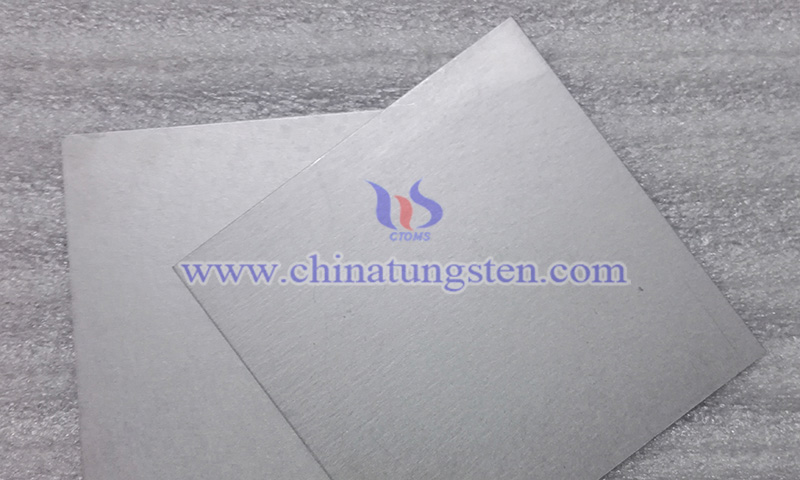
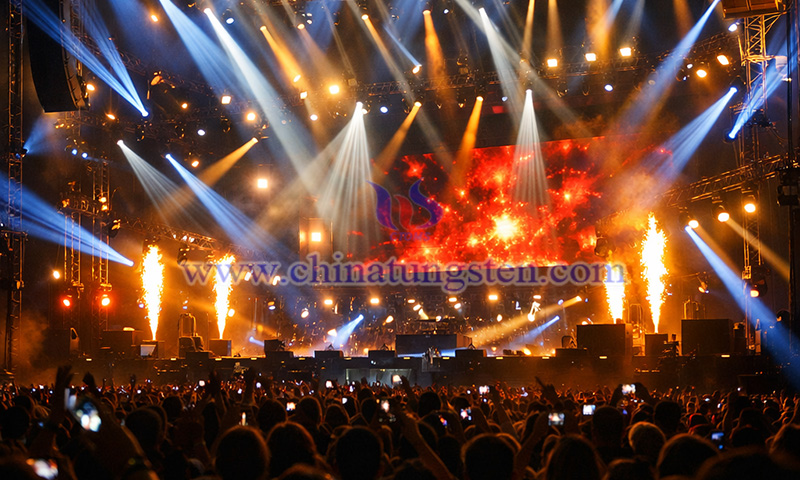
CTIA tungsten plate plays an important role in the lighting industry, especially in high-end light source equipment such as high-power discharge lamps, specialty arc lamps, and high-energy radiation light source systems. Stage lighting fixtures are a typical application of high-power discharge light sources. The internal structures of these systems operate for long periods under high temperature, high current density, and intense radiation.
According to on-site customer feedback, the core arc temperature in some fixtures can exceed 3000°C, with structural zone temperatures typically fluctuating between 1000–2000°C, accompanied by frequent thermal cycling and arc impacts. In specialty arc light sources and high-energy radiation light source systems, localized areas may experience even higher energy densities and stronger radiation fluxes, posing continuous challenges to material stability.
Under these extreme conditions, structural materials must possess not only ultra-high melting points and high-temperature strength to resist sustained thermal loads and arc erosion, but also excellent ablation resistance, low vapor pressure, high purity, and good thermal conductivity to prevent metal vapor contamination of the lamp atmosphere or failure due to structural softening. Dimensional stability directly affects beam stability and equipment service life.
After comparative validation across multiple materials, customers ultimately selected tungsten plates supplied by CTIA GROUP. Tungsten features a melting point of 3422°C, boiling point of 5555°C, and density of 19.3 g/cm³, while retaining relatively high strength and elastic modulus at elevated temperatures. Its vapor pressure is significantly lower than that of most heat-resistant metals, providing outstanding stability in vacuum or inert atmospheres; it also offers good thermal conductivity to effectively dissipate localized heat, reducing risks of thermal stress concentration and thermal cracking.
In actual operation of high-power discharge light sources such as stage lighting, key high-temperature structural components made from tungsten plate maintain excellent morphology and structural stability under continuous high-load conditions, resulting in significantly extended service life. This application case further validates the engineering suitability and reliability of CTIA tungsten plates in high-power discharge light sources, specialty arc light sources, and high-energy radiation light source systems.
1. Tungsten Plate for Internal High-Temperature Structural Components in High-Power Discharge Lamps
In high-pressure mercury lamps, metal halide lamps, and certain specialty discharge lamps, tungsten plates are primarily used for high-temperature support plates, internal thermal insulation baffles, and structural stabilization plates. The discharge process generates intense thermal radiation and localized arc impacts, causing ordinary metals to soften, warp, or cause evaporation contamination.
Tungsten plates, with their ultra-high melting point and low vapor pressure, maintain structural stability in long-term high-temperature discharge environments, preventing contamination of the lamp atmosphere by metal vapors. Their relatively high thermal conductivity promotes uniform heat dissipation, reducing localized overheating risks. Tungsten’s superior creep resistance at high temperatures helps maintain dimensional accuracy during prolonged operation. Under high-power conditions with frequent on/off cycling, tungsten plates’ excellent high-temperature strength and thermal fatigue resistance help minimize crack formation and enhance overall lamp lifespan.
2. Tungsten Plate for Specialty Arc Light Source Structural Plate
In high-current-density arc light sources, experimental-grade light sources, or industrial inspection light source equipment, tungsten plates are commonly used as arc-bearing structural plates, electrode support plates, and arc protective baffles. Arc discharge exhibits strong ablation and impact characteristics, imposing extremely high demands on material erosion resistance.
Tungsten has a high arc erosion threshold and good anti-sputtering capability, resulting in relatively low material loss rates under sustained discharge and helping maintain structural geometric stability. Its high elastic modulus and high-temperature hardness help preserve electrode spacing accuracy, reducing arc drift and unstable discharge phenomena. In high-power continuous discharge equipment, tungsten plates can also serve as localized thermal shielding structures, mitigating the impact of thermal radiation on housings or insulating components, thereby improving overall system reliability.
3. Tungsten Plate for Anode Target Plate in X-ray Light Sources
In X-ray generation devices, anode target plates must withstand sustained bombardment by high-energy Electron Beams (EB). Upon impact, most kinetic energy converts to heat, with only a small portion becoming X-rays, resulting in extremely rapid localized temperature rises and very high heat flux densities. This places stringent requirements on the material’s thermal shock resistance and structural stability. The target must also have a high atomic number to improve X-ray production efficiency, along with an ultra-high melting point, good thermal conductivity, and thermal fatigue resistance.
Tungsten, with atomic number 74 and density 19.3 g/cm³, offers excellent X-ray conversion efficiency and strong radiation attenuation. Its 3422°C melting point prevents melting or severe ablation under high-energy electron bombardment, significantly reducing target surface morphology degradation risks. Tungsten plates’ good thermal conductivity rapidly conducts heat to water- or oil-cooling systems, minimizing localized thermal stress concentration and reducing risks of thermal cracking or delamination.
Under high-load continuous operation or pulsed modes, tungsten plates maintain target face geometric stability thanks to their high high-temperature strength and creep resistance, outperforming most heat-resistant alloys. This long-term stability contributes to consistent imaging quality and extends maintenance intervals and overall equipment lifespan.
4. Tungsten Plate for High-Temperature Reflector Plate in Ultra-High-Power Fixtures
In a small number of ultra-high-power fixtures or research-grade light source systems, internal thermal radiation intensity and heat flux density far exceed those of conventional lighting equipment. Beyond the arc core region, surrounding structures also endure intense thermal radiation and thermal cycling impacts. Tungsten plates can be used as high-temperature reflector plates or light-blocking structural plates to control beam direction, improve light utilization efficiency, or block localized high-temperature radiation.
Tungsten retains relatively high strength and elastic modulus at elevated temperatures, with excellent thermal shock resistance, resisting cracking or warping under rapid heating or cooling. Its low evaporation characteristics prevent high-temperature metal vapor deposition on optical windows or reflective surfaces, reducing light attenuation and contamination risks.
Although material costs are relatively high, in experimental equipment or specialty light sources where stability, safety, and lifespan requirements are extremely stringent, tungsten plates significantly enhance overall reliability and operational safety margins, demonstrating their value in high-end applications.
5. Tungsten Plate for Internal Support Structures in Specialty Lamp Tubes
In certain high-power or specialty discharge lamps, tungsten plates serve as internal support and positioning components for fixing electrodes, supporting lead-out structures, or maintaining component alignment. In high-temperature discharge environments, ordinary metals are prone to displacement due to thermal expansion or creep, affecting discharge path stability and light output consistency.
Tungsten has a low coefficient of linear expansion and excellent dimensional stability, maintaining structural precision and assembly clearances under high-temperature cycling. Its high-temperature creep resistance reduces long-term deformation risks, ensuring electrode spacing and geometric structures remain largely unchanged.
In some vacuum or inert-gas-encapsulated lamps, tungsten plates can also function as internal shielding or localized thermal insulation structures, minimizing the effects of stray electrons, ions, or thermal radiation on sensitive components. Their high purity reduces impurity volatilization risks, maintaining internal lamp atmosphere cleanliness and improving long-term operational stability.
Applications of tungsten plates in the lighting industry primarily focus on key functions such as high-temperature structural load-bearing, arc protection, electron beam bombardment resistance, thermal shielding, and internal support/positioning. Their core advantages include ultra-high melting point, low vapor pressure, excellent arc erosion resistance, high-temperature strength, and dimensional stability.
Although tungsten plates are a niche high-end material in the high-power and specialty light source equipment field, they are irreplaceable under extreme conditions. As high-end light source technologies continue to advance toward higher power and greater stability, CTIA tungsten plates will maintain significant application value in professional lighting and research-grade light source domains.
For any inquiry, please contact tungsten plate manufacturer: CTIA GROUP
Email: sales@chinatungsten.com
Tel: 0086 592 5129696 / 0086 592 5129595
Website: www.tungsten.com.cn
WeChat:

More info>>