
CTIA Tungsten Plate Applied to Anti-Corrosion
Tungsten plate demonstrates remarkable structural advantages and application potential in anti-corrosion environments. In chemical and corrosive settings, materials are often subjected to extreme and complex conditions, including strong acids and bases, high-temperature oxidative atmospheres, molten metal erosion, electrochemical corrosion, and coupled thermal and mechanical stresses.
With an ultra-high melting point of 3422 °C, high density of 19.3 g/cm³, excellent high-temperature strength, and superior creep resistance, tungsten plates maintain structural stability and functional integrity in environments where conventional materials fail. As a tungsten plate manufacturer, CTIA GROUP possesses systematic capabilities in controlling material purity, optimizing grain structure, and ensuring high-temperature stability, offering reliable material solutions for advanced chemical equipment requiring both corrosion and heat resistance.
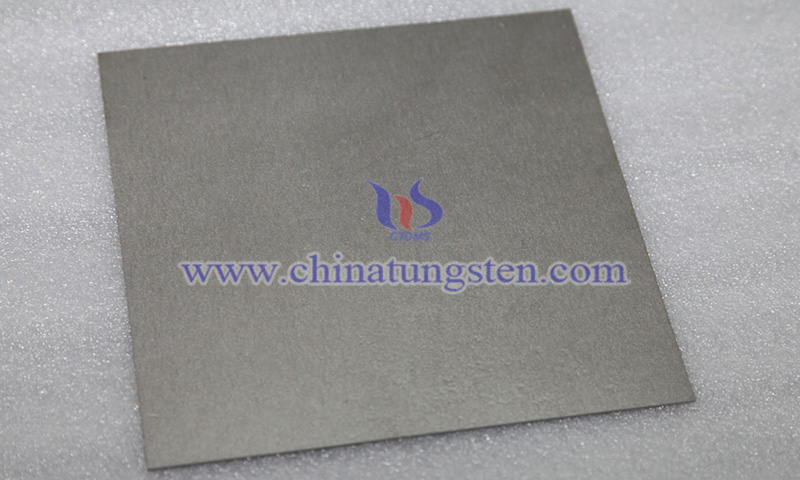
In high-temperature reaction systems involving sulfuric acid, nitric acid, hydrochloric acid, or certain fluoride-containing media, reactor linings endure combined chemical corrosion, thermal shock, and fluid erosion over long periods. Tungsten exhibits high chemical stability in some strong acid environments; its surface can form dense oxide films (WO₂/WO₃), which act as self-passivating protective layers under specific conditions. Studies indicate that in high-temperature sulfuric acid atmospheres, tungsten corrodes more slowly than many iron- and nickel-based corrosion-resistant alloys.
Tungsten plates can be used as localized corrosion-resistant liners in vulnerable areas of reactors, such as nozzle openings, discharge ports, and turbulent flow regions. Their high melting point ensures structural stability above 600 °C without softening or collapse. With an elastic modulus of approximately 410 GPa and tensile strength ≥550 MPa, tungsten maintains significant load-bearing capacity under high-temperature conditions, reducing the risk of sealing failures caused by structural deformation. In composite lining designs, tungsten plates can be combined with heat-resistant alloys or ceramic layers to form multilayer linings, optimizing corrosion resistance and structural support while extending equipment life and reducing maintenance frequency.
2. Tungsten Plate as a Molten Metal Isolation PanelIn metallurgy, casting, and vacuum melting processes, equipment components often contact molten metals or high-temperature metal vapors exceeding 1600 °C. Such environments involve not only extreme temperatures but also severe thermal shocks and chemical attacks. Tungsten plates, with their high melting point and low vapor pressure, resist melting or volatilization in molten metal environments. Tungsten also exhibits low chemical affinity with most molten metals, slowing interfacial reactions. Under prolonged high-temperature exposure, its creep resistance surpasses that of conventional high-temperature alloys, maintaining the geometric stability of isolation panels.
In molten metal separation structures, tungsten plates can serve as direct-contact layers or wear-resistant isolation layers, separating zones with different temperatures or compositions to prevent cross-contamination. Their excellent thermal conductivity helps reduce temperature gradients and thermal stress concentrations, lowering the likelihood of cracking.
3. Tungsten Plate for High-Temperature Corrosive Gas EnvironmentsIn high-temperature chlorination, sulfide treatment, and catalytic oxidation processes, structural components must withstand corrosive gases such as Cl₂, HCl, SO₂, coupled with high-temperature oxidation. Tungsten forms stable oxide films under low oxygen partial pressures, providing some protection against further oxidation.
Experimental studies show that in 600–900 °C chlorinated atmospheres, the tungsten oxide layer forms slowly and offers a protective effect. Compared with pure molybdenum or some high-temperature alloys, tungsten exhibits better dimensional stability and resistance to grain coarsening in the oxidation-decomposition temperature range. In such conditions, tungsten plates are often used as localized barriers or thermal shielding structures, forming composite protective systems with oxide ceramics or high-temperature alloys, enhancing overall corrosion and thermal shock resistance.
4. Tungsten Plate in Molten Salt and Electrochemical Corrosion EnvironmentsIn molten salt energy storage systems and certain electrolytic chemical processes, materials are exposed long-term to high-temperature salt media. Molten salts are highly corrosive to conventional metals and may involve electrochemical reactions. Tungsten exhibits low dissolution rates in some molten salt systems, and its high-temperature strength and structural stability support the long-term reliability of critical components. In electrolytic or high electric field environments, tungsten’s wide electrochemical stability range helps reduce corrosion rates of electrodes or structural parts.
Tungsten plates can serve as localized corrosion-resistant liners, electrode support structures, or thermal isolation layers, forming multilayer composite designs with ceramics or corrosion-resistant alloys to separate corrosion and load-bearing functions.
5. Tungsten Plate in Composite Corrosion-Resistant StructuresIn extreme corrosive environments, single materials often cannot simultaneously satisfy corrosion resistance and mechanical performance requirements. Tungsten plates, as high-density, high-temperature core layers, can be combined with alumina (Al₂O₃) ceramics, high-temperature alloys, or molybdenum-based materials to form composite structures. Through functional layering, these composites optimize corrosion resistance, heat resistance, and impact strength. In high-temperature chemical reactors, cracking furnaces, and molten media transport systems, tungsten-based composite structures significantly extend equipment life and reduce maintenance costs.
The applications of tungsten plates in chemical and highly corrosive environments primarily include lining high-temperature acid reactors, molten metal isolation panels, structural components in high-temperature corrosive gas atmospheres, and critical parts exposed to molten salts or electrochemical environments. Key advantages include ultra-high melting point, high-temperature strength, excellent creep resistance, chemical stability, and dimensional stability.
As advanced chemical equipment increasingly operates under higher temperatures and more corrosive conditions, tungsten plate, as a critical high-temperature, corrosion-resistant structural material, will play an increasingly important role. Leveraging its tungsten plate manufacturing technology and stable large-scale production capacity, CTIA provides reliable material solutions for chemical and specialty highly corrosive environments.
For any inquiry, please contact tungsten plate manufacturer: CTIA GROUP
Email: sales@chinatungsten.com
Tel: 0086 592 5129696 / 0086 592 5129595
Website: www.tungsten.com.cn
WeChat:

More info>>