
CTIA Tungsten Plate Applied to Electronic Vacuum and Electro Optical Source
CTIA tungsten plate plays a critical role in the electronic vacuum and electro optical source industry. These industries involve complex operating conditions such as high voltage, high current density, high vacuum, and high heat flux, with typical equipment including high-power electron tubes, microwave devices, X-ray tubes, discharge light sources, and high-power laser systems. Such devices impose extremely stringent requirements on structural materials in terms of arc erosion resistance, thermal stability, vacuum compatibility, and dimensional precision. As a high-melting-point metal with a melting point of 3422°C and density of 19.3 g/cm³, tungsten features low vapor pressure, high thermal conductivity, and excellent ablation resistance, and has long been regarded as a key functional material in electronic vacuum systems.
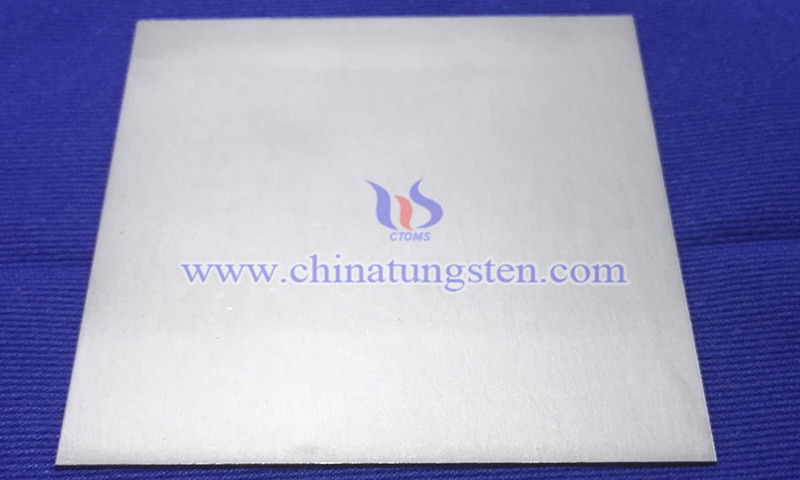
In high-power electron tubes, traveling wave tubes, klystrons, and industrial microwave sources, anode plates absorb electron beam bombardment and convert heat. The electron beam strikes the anode surface at high voltage acceleration, generating extremely high instantaneous heat flux density along with arc discharge risks.
Tungsten plates, with their high melting point and low vapor pressure, exhibit minimal evaporation or sublimation in high-temperature vacuum environments, helping maintain internal cavity cleanliness. Their superior arc erosion resistance allows them to retain structural integrity even under occasional arc discharges, reducing the probability of anode surface damage.
Tungsten’s relatively high thermal conductivity rapidly transfers heat from electron bombardment to cooling structures, minimizing local temperature rise and preventing thermal stress concentration. At elevated temperatures, tungsten maintains high strength and creep resistance, resisting deformation under prolonged thermal loads and thereby ensuring precise electrode gaps and stable electron beam trajectories. In high-vacuum environments, outgassing rate significantly affects device lifetime; after proper degassing, tungsten exhibits a low outgassing rate, meeting the long-term operational needs of high-vacuum devices and improving overall reliability.
2. Tungsten Plate for Anode Target in X-ray TubesIn medical and industrial X-ray tubes, the anode target surface generates X-rays via electron beam bombardment. Tungsten’s high atomic number (Z=74) results in high bremsstrahlung efficiency during electron deceleration, making it one of the most effective metals for X-ray production. CTIA tungsten plates are commonly used as target layers in high-speed rotating anodes or as backing/support structures in composite anodes. The bombarded area can reach instantaneous temperatures above 2000°C, requiring exceptional thermal shock resistance. Tungsten’s high melting point and heat capacity enable it to withstand repeated thermal cycles without significant melting loss.
In rotating anode designs, tungsten is typically combined with molybdenum or graphite-based materials to optimize thermal stress distribution. Tungsten plates provide high-strength support and a stable target surface foundation. Their good thermal conductivity rapidly conducts heat to the internal rotor cooling system, preventing overheating-induced cracking or spalling on the target face. Under high-frequency scanning conditions, tungsten plates maintain stable thermal equilibrium, improving X-ray output consistency and equipment lifetime, making them a core material in high-end CT and industrial non-destructive testing systems.
3. Tungsten Plate for Protective Plate in High-Power Laser SystemsIn high-power laser systems, laser channels, beam-shaping regions, and beam dumps often experience high-energy radiation and scattered light impacts. If protective materials lack sufficient heat resistance, they can cause evaporation contamination or surface ablation, compromising optical system stability. Tungsten plates, with their high melting point and low vapor pressure, effectively resist ablation and minimize metal vapor contamination under occasional beam misalignment or scatter impacts. Their high density and heat capacity help absorb transient thermal shocks and reduce surface temperature rise rates.
In industrial laser processing equipment, CTIA tungsten plates are also used for beam dump absorption plates or safety shielding structures, enhancing operational safety. Their radiation resistance and dimensional stability ensure structural integrity during long-term operation, reducing maintenance frequency.
4. Tungsten Plate for Electrode Structure in High-Intensity Discharge Light SourcesIn high-intensity discharge lamps and specialty electro-optical sources, electrode regions are exposed to high-temperature plasma environments over extended periods. CTIA tungsten plates can be used for electrode support structures or localized protective plates. Tungsten’s low evaporation rate at high temperatures reduces metal vapor deposition on lamp walls. Its arc erosion resistance helps extend electrode structure lifetime and improve light source output stability.
5. Tungsten Plate for Liner in Vacuum Metallurgy and Electron Beam Processing EquipmentIn electron beam welding, electron beam melting, and vacuum heat treatment equipment, localized areas endure direct high-energy electron beam bombardment. CTIA tungsten plates serve as liners or baffle structures to absorb excess beam energy and protect primary structures. Their low sputter yield minimizes metal evaporation contamination, maintaining vacuum cleanliness. Under high-energy beam impacts, tungsten retains high structural stability, making it suitable for prolonged continuous operation.
6. Tungsten Plate for Thermal Load Structure in Microwave and RF DevicesIn high-power microwave windows and RF amplifiers, localized regions generate significant thermal loads. CTIA tungsten plates function as heat spreaders or shielding structures to dissipate heat and maintain electromagnetic stability. Their high strength and modulus ensure structural rigidity under complex electromagnetic vibrations, minimizing deformation effects on device performance.
The applications of CTIA tungsten plates in the electronic vacuum and electro-optical source industries cover anode structures in electron tubes, target and support structures in X-ray tubes, protective plates in high-power lasers, electrode structures in high-intensity discharge sources, liners in electron beam processing equipment, and thermal load structures in microwave/RF devices. Their core advantages include ultra-high melting point, low vapor pressure, high thermal conductivity, excellent arc erosion resistance, and superior vacuum compatibility.
As high-power electronic devices, miniaturized high-frequency equipment, and advanced imaging systems continue to evolve, the demand for stable high-temperature, high-load materials will increase further. Tungsten plates, as essential high-temperature functional materials, will continue to provide fundamental support in the electronic vacuum and electro-optical source industrial ecosystem.
For any inquiry, please contact tungsten plate manufacturer: CTIA GROUP
Email: sales@chinatungsten.com
Tel: 0086 592 5129696 / 0086 592 5129595
Website: www.tungsten.com.cn
WeChat:

More info>>