
CTIA Tungsten Plate Applied to Semiconductor and Microelectronics
In semiconductor and microelectronics industries, tungsten plate plays a critical role as a high-performance material capable of withstanding extreme thermal, mechanical, and chemical conditions. CTIA tungsten plates combine ultra-high melting point (3422°C), high density (19.3 g/cm³), low vapor pressure (~10⁻⁶ Pa), excellent thermal conductivity (~170 W/m·K), and strong resistance to radiation and corrosion.
These properties make them ideal for a wide range of advanced equipment, including sputtering targets for Physical Vapor Deposition (PVD), ion implantation components, Chemical Vapor Deposition (CVD) and Plasma Enhanced Chemical Vapor Deposition (PECVD) reaction chamber parts, dry etching chamber protections, electron beam evaporation carrier plates, diffusion furnace trays, high-energy ion beam absorbers, vacuum heating elements, and photolithography systems. By maintaining structural integrity, minimizing material volatilization, and ensuring uniform thermal distribution, CTIA tungsten plates enhance process stability, deposition precision, and equipment reliability, supporting the high demands of modern semiconductor manufacturing and microelectronics development.
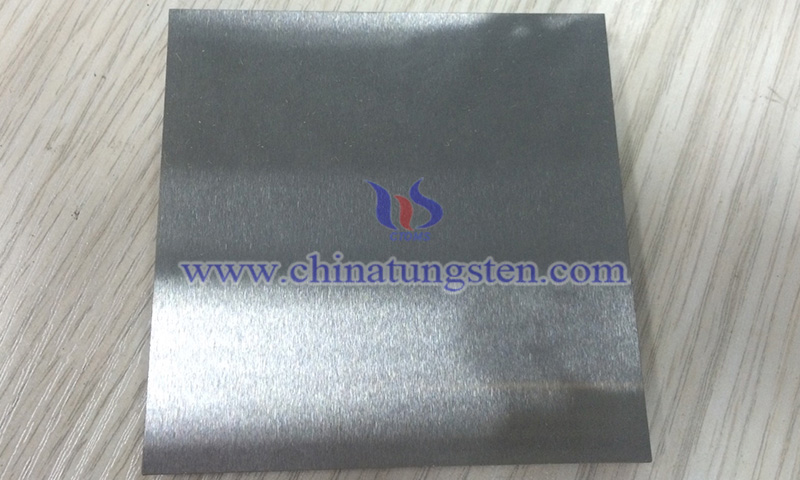
CTIA tungsten plates are widely used in the deposition of metal interconnection layers, contact layers, and barrier layers in integrated circuits, particularly as sputtering targets in Physical Vapor Deposition (PVD) processes. One of the key properties that makes tungsten an ideal sputtering target material is its extremely low vapor pressure (approximately 10⁻⁶ Pa). In high-vacuum environments, this characteristic is critical because it effectively minimizes material volatilization and contamination, thereby ensuring the purity and stability of thin film deposition. Owing to this property, tungsten has become widely used in demanding semiconductor manufacturing processes, especially in thin-film deposition.
The high melting point of tungsten (3422°C) is another important advantage when used as a sputtering target. This high melting temperature allows tungsten plates to remain stable under extreme conditions involving high-energy ion bombardment, preventing melting or deformation. As a result, tungsten plates can maintain a stable deposition environment during high-power sputtering processes, ensuring film uniformity and stability while avoiding quality issues caused by material softening. Tungsten also exhibits excellent thermal shock resistance and can withstand temperature gradients of up to 2000°C, significantly reducing thin-film defects caused by thermal stress and improving deposition purity and consistency. These outstanding properties make CTIA tungsten plates highly valuable in the semiconductor and microelectronics industries, particularly in high-tech sectors such as integrated circuits, display technologies, and solar cells.
2. Tungsten Plate for Ion Implantation Equipment ComponentsCTIA tungsten plates are widely used in ion implantation equipment, primarily for key components such as beam blockers, ion window plates, and chamber protection plates. During ion implantation, ion beams strike target materials at extremely high energy, creating a very harsh internal environment in which materials must maintain exceptional durability and stability. Due to its unique physical and chemical properties, tungsten plate is an ideal material for these critical components.
Tungsten’s high density (19.3 g/cm³) and high tensile strength (≥550 MPa) allow it to maintain long-term structural stability under high-energy ion bombardment and radiation environments. Its low sputtering yield is another significant advantage in ion implantation systems. A lower sputtering rate reduces material loss and particle contamination caused by high-energy ion impact, helping maintain stable deposition conditions within the equipment and improving long-term operational stability and precision.
Tungsten also exhibits outstanding radiation resistance. Under prolonged exposure to high-energy radiation, tungsten demonstrates far greater irradiation stability than many other metals, effectively preventing radiation-induced material degradation and extending equipment service life and maintenance intervals. Consequently, tungsten plates not only maintain structural integrity in high-radiation environments but also support stable and efficient ion implantation processes, providing reliable long-term performance for semiconductor manufacturing equipment.
3. Tungsten Plate for Chemical Vapor Deposition (CVD) / Plasma Enhanced Chemical Vapor Deposition (PECVD) Reaction Chamber ComponentsCTIA tungsten plates are widely used in Chemical Vapor Deposition (CVD) and Plasma Enhanced Chemical Vapor Deposition (PECVD) reaction chambers, mainly as substrate heating trays, plasma shielding plates, and chamber liner structures. Due to its excellent material properties, tungsten is an ideal material for such high-temperature and high-radiation environments.
The high thermal conductivity of tungsten (approximately 170 W/m·K) enables effective heat distribution in high-temperature environments, maintaining a uniform temperature field and minimizing thermal gradients. This ensures uniform and stable thin-film deposition while reducing thickness deviations. This characteristic is critical in semiconductor manufacturing, particularly in processes requiring highly precise film deposition.
Tungsten’s high melting point (3422°C) allows it to operate reliably in high-temperature reaction environments without melting or deformation. This stability is essential for maintaining process reliability and preventing contamination caused by material volatilization that could affect wafer quality. Even under prolonged high-temperature exposure and aggressive process gases, tungsten maintains excellent structural integrity with minimal degradation.
In addition, tungsten demonstrates strong corrosion resistance in CVD and PECVD environments. It can effectively resist chemical gases such as fluorides and chlorides that may cause severe corrosion to other metallic materials at elevated temperatures. This corrosion resistance ensures long-term reliability of deposition equipment while reducing maintenance frequency and operational costs.
Through its application in CVD and PECVD reaction chambers, tungsten plates help optimize temperature field distribution and reduce thin-film deposition errors. Their high melting point and corrosion resistance further ensure long-term equipment stability and reliability, making tungsten an indispensable material in semiconductor manufacturing.
4. Tungsten Plate for Dry Etching Equipment Chamber Protection ComponentsDuring plasma etching processes, CTIA tungsten plates are commonly used as chamber protection plates. Etching chamber interiors are exposed to high-energy ions and corrosive gases such as fluorides and chlorides for extended periods, requiring materials with high melting point, strong atomic bonding, and excellent corrosion resistance. Due to its superior physical and chemical properties, tungsten is an ideal material for such applications.
The high density of tungsten (19.3 g/cm³) provides excellent resistance to plasma erosion, effectively reducing particle contamination. During plasma etching, high-energy ions continuously bombard chamber surfaces, which can lead to material erosion and particle generation. The density and hardness of tungsten enable it to maintain stability under these conditions, helping preserve etching quality consistency.
Another significant advantage of tungsten is its low sputtering yield. A lower sputtering rate means reduced material loss under high-energy ion impact, minimizing particle generation caused by sputtering. This property allows tungsten to maintain the integrity of chamber surfaces in high-power etching environments, improving equipment stability and extending service life.
Tungsten also exhibits a high Vickers hardness typically exceeding 300 HV, providing strong wear resistance in high-power plasma environments. This allows tungsten plates to maintain dimensional stability during long-term operation, reducing equipment maintenance frequency and ensuring process consistency. Its high melting point (3422°C) further guarantees stability under elevated temperatures, preventing deformation or melting during etching processes.
Tungsten’s corrosion resistance is particularly important in etching environments. In the presence of corrosive gases such as fluorides and chlorides, tungsten maintains excellent chemical stability and resists degradation. This protects equipment components and ensures long-term operational reliability. These characteristics make tungsten plates essential materials in plasma etching systems, especially in high-precision semiconductor manufacturing equipment.
5. Tungsten Plate for Electron Beam Evaporation System Carrier PlatesIn electron beam evaporation (E-beam Evaporation) processes, CTIA tungsten plates are used as target carrier plates or structural supports. During electron beam evaporation, localized temperatures of the target material can rapidly exceed 2000°C, placing extremely high demands on structural materials. Tungsten, with its very high melting point of 3422°C, can operate reliably under such conditions without melting or deformation, ensuring structural stability of the carrier plate.
Tungsten’s high thermal conductivity (approximately 170 W/m·K) is another key advantage. It allows heat to be rapidly conducted away from high-temperature zones, preventing localized thermal stress accumulation and reducing the risk of cracking or warping. This ensures system stability and reliability during high-temperature deposition processes.
The low vapor pressure of tungsten (approximately 10⁻⁶ Pa) also reduces the risk of contamination caused by material evaporation at high temperatures. In electron beam evaporation systems, material volatilization can negatively affect thin-film purity. Tungsten’s low vapor pressure significantly reduces this risk, helping maintain high deposition quality.
Additionally, tungsten’s excellent thermal shock resistance allows it to maintain structural stability during long-term high-temperature operation. When used as carrier plates in electron beam evaporation systems, CTIA tungsten plates provide reliable performance through their high melting point, excellent thermal conductivity, low vapor pressure, and superior thermal shock resistance, ensuring stable thin-film deposition and improved film purity and uniformity.
6. Tungsten Plate for Diffusion Furnaces and High-Temperature Annealing Equipment ComponentsIn diffusion furnaces and high-temperature annealing equipment, CTIA tungsten plates are widely used as wafer carrier trays and furnace protection structures. Tungsten’s low coefficient of thermal expansion (approximately 4.5×10⁻⁶/K) enables excellent dimensional stability at elevated temperatures. Diffusion furnaces and annealing systems typically operate in temperature ranges from 800°C to 1200°C, and tungsten’s stability ensures that minimal dimensional changes occur during long-term operation, maintaining wafer flatness and process consistency.
Tungsten’s high elastic modulus (approximately 410 GPa) and strong creep resistance allow it to maintain high rigidity even under prolonged thermal loads. This prevents deformation caused by thermal expansion and ensures uniform temperature distribution across wafers, which is essential for achieving consistent thin-film deposition quality.
The superior creep resistance of tungsten becomes particularly significant under high-temperature conditions, reducing deformation caused by thermal fluctuations and improving overall production consistency and reliability. Compared with materials such as graphite, tungsten provides better high-temperature strength and creep resistance, effectively reducing wafer-to-wafer variation and temperature field inconsistencies. The use of CTIA tungsten plates in diffusion furnaces and high-temperature annealing equipment ensures stable wafer support and uniform thermal conditions throughout the manufacturing process.
7. Tungsten Plate for High-Energy Ion Beam and Beam Terminal Absorption StructuresCTIA tungsten plates are widely used as absorber plates or terminal shielding structures in high-energy ion beam systems. Tungsten’s high atomic number (Z=74) and high density (19.3 g/cm³) allow it to effectively absorb the kinetic energy of high-energy particles, reducing reflection and scattering while maintaining system stability.
High-energy particle beams generate significant thermal loads when impacting structural components. Tungsten’s high melting point (3422°C) and excellent thermal shock resistance enable it to operate reliably under such extreme conditions, preventing erosion or deformation caused by thermal stress.
With a tensile strength of ≥550 MPa and high structural rigidity, tungsten plates maintain their integrity even under continuous high-energy particle bombardment. While other materials may deform or degrade under such conditions, tungsten maintains structural stability in high-radiation environments. These properties significantly extend equipment service life and improve operational stability.
Because of these characteristics, tungsten plates are ideal materials for beam terminal absorption structures, where they effectively absorb particle energy while maintaining mechanical and thermal stability under extreme operating conditions.
8. Tungsten Plate for Vacuum Chamber Heating ElementsTungsten plates are also used as heating element materials in vacuum chambers due to their extremely high melting point (3422°C) and excellent thermal conductivity (170 W/m·K). In vacuum environments, heating elements must exhibit outstanding thermal stability and heat transfer capability to ensure reliable operation at elevated temperatures.
The high melting point of tungsten enables it to withstand extremely high temperatures without softening or melting, ensuring long-term structural stability of heating components. Its high thermal conductivity allows heat to be rapidly distributed, preventing localized overheating and protecting equipment from thermal damage.
Tungsten’s low vapor pressure (approximately 10⁻⁶ Pa) is particularly important in vacuum environments because it minimizes material volatilization that could contaminate the chamber. Material evaporation in vacuum systems can negatively affect both heating performance and overall process stability. Tungsten’s low vapor pressure effectively mitigates this issue.
By combining high melting point, excellent thermal conductivity, and low vapor pressure, CTIA tungsten plates provide reliable and stable performance as vacuum heating elements, ensuring consistent thermal operation and long-term equipment reliability in high-temperature vacuum systems.
9. Tungsten Plate for Photolithography EquipmentPhotolithography is one of the most critical processes in semiconductor manufacturing. In photolithography equipment, CTIA tungsten plates are mainly used for masks and optical window components. Due to tungsten’s high density (19.3 g/cm³) and excellent structural stability, it can maintain dimensional integrity in high-radiation environments, ensuring high precision during lithography processes.
In particular, in Extreme Ultraviolet (EUV) lithography systems, tungsten materials effectively resist thermal expansion and deformation caused by intense radiation from EUV light sources. This stability helps maintain lithography precision under demanding operating conditions.
Tungsten also exhibits excellent radiation resistance. Under high-energy particle exposure, it maintains structural stability and resists radiation-induced degradation. This property helps reduce errors caused by radiation effects during lithography processes and improves overall precision and reliability.
With a high elastic modulus (approximately 410 GPa), tungsten ensures that masks and optical window structures remain stable without deformation even in high-temperature and high-energy environments. Its low vapor pressure (approximately 10⁻⁶ Pa) further prevents material evaporation at high temperatures, avoiding contamination of silicon wafers during photolithography processes.
Additionally, tungsten’s excellent thermal stability and thermal shock resistance make it highly suitable for lithography systems operating in complex thermal environments. Its relatively low thermal expansion coefficient helps reduce thermal distortion and ensures stable long-term performance of photolithography equipment. These properties make tungsten an indispensable material in advanced semiconductor manufacturing.
For any inquiry, please contact tungsten plate manufacturer: CTIA GROUP
Email: sales@chinatungsten.com
Tel: 0086 592 5129696 / 0086 592 5129595
Website: www.tungsten.com.cn
WeChat:

More info>>