
CTIA's Tungsten Crucible in Crystal Growth & Semiconductor Materials
Tungsten crucible in crystal growth and semiconductor material preparation is an essential high-temperature-resistant vessel. Tungsten has a melting point of approximately 3,420°C, a density of about 19.3 g/cm³, and a linear expansion coefficient of around 4.5×10⁻⁶/K. Combined with its low vapor pressure, excellent high-temperature strength, and outstanding creep resistance, tungsten can operate stably over long periods under vacuum or inert atmosphere. Compared to conventional heat-resistant metals, tungsten maintains superior structural stability even above 2,000°C, making it highly suitable for long-cycle, continuous, high-temperature operations.
With the rapid development of the third-generation semiconductor, optoelectronics, and advanced crystal material industries, the fabrication of materials such as monocrystalline silicon, sapphire, silicon carbide (SiC), and gallium arsenide (GaAs) has placed higher demands on the high-purity, high-temperature-resistant melt containers within thermal field systems. High-purity tungsten crucibles have become widely adopted in the fields of crystal growth and semiconductor materials due to their low impurity content, high-temperature resistance, and excellent thermal stability.
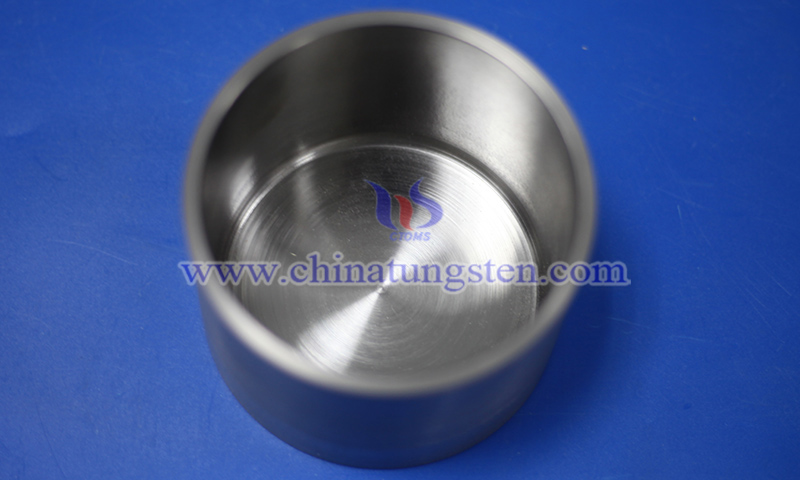
1. Why Are Tungsten Crucibles Used in Crystal Growth Equipment?
Crystal growth processes are typically carried out under high-temperature, vacuum, or inert gas environments, with some process temperatures exceeding 2,000°C. Conventional metal materials tend to soften, deform, or generate volatilization contamination under extreme heat. Tungsten features extremely high melting point and excellent high-temperature strength, enabling tungsten crucible to operate reliably in ultra-high-temperature thermal fields. Meanwhile, low vapor pressure of tungsten minimizes volatilization contamination at elevated temperatures, helping reduce impurity introduction into molten systems while improving purity control and thermal field stability during crystal growth processes.
2. What Role Do CTIA's Tungsten Crucibles Play in Monocrystalline Silicon Growth?
In monocrystalline silicon-related high-temperature processes or experimental crystal growth systems, CTIA's tungsten crucibles primarily serve as containment vessels for high-temperature molten environments. In certain thermal field designs, they are utilized in the high-temperature-resistant load-bearing zones near the melt to endure the material environment under molten conditions.
Although the melting point of monocrystalline silicon is around 1,414°C, local temperatures within the actual thermal field are often much higher, imposing strict requirements on the material's creep resistance and dimensional stability. Tungsten retains excellent strength above 2,000°C, which reduces the impact of thermal field structural changes on melt stability. Concurrently, its low vapor pressure minimizes high-temperature volatile contamination, reducing the risk of impurities infiltrating the melt.
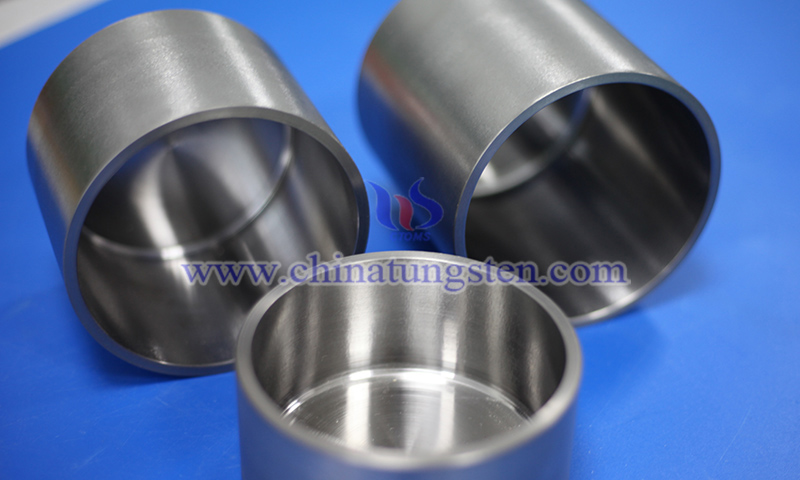
3. Why Are CTIA's Tungsten Crucibles Suitable for Sapphire Crystal Growth?
Sapphire crystal growth (monocrystalline Al₂O₃ preparation) typically occurs at temperatures close to 2,050°C, a classic ultra-high-temperature operating condition. CTIA's tungsten crucibles serve primarily as high-temperature melt containers to hold the alumina melt system and participate in material stability control within the molten environment.
Conventional metal materials are prone to softening, deformation, or contamination within this temperature range, whereas tungsten maintains high strength retention and structural stability under elevated temperatures, meeting long-term continuous operation requirements. High-purity tungsten materials also help reduce impurity introduction risks in high-temperature environments, improving optical uniformity and structural integrity during high-quality sapphire crystal growth processes.
4. What Are the Applications of CTIA's Tungsten Crucibles in Compound Semiconductor Material Preparation?
During preparation of compound semiconductor materials such as gallium arsenide (GaAs) and indium phosphide (InP), CTIA’s tungsten crucible is mainly used as high-temperature melting container for specialized high-temperature experimental environments.
These semiconductor materials require extremely high purity, with impurity control commonly reaching ppm levels or lower. Therefore, crucible materials must provide high purity and low volatilization characteristics. Tungsten features low vapor pressure, minimizing volatilization contamination under elevated temperatures and helping reduce secondary contamination sources. Under high-temperature vacuum or protective atmosphere, tungsten crucible helps maintain stable melting and heat-treatment environments, improving consistency and controllability during material preparation processes.
5. Why Are CTIA's Tungsten Crucibles Suitable for Wide-Bandgap Semiconductors Like Silicon Carbide (SiC)?
The crystal growth temperature for wide-bandgap semiconductor materials like silicon carbide (SiC) typically exceeds 2,200°C, with certain regions of the thermal field reaching even higher temperatures. This places exceptionally high demands on the high-temperature strength and creep resistance of the components.
CTIA's tungsten crucibles are primarily used for high-temperature raw material containment and as melting vessel in specialized high-temperature thermal field. Tungsten materials retain excellent structural stability under ultra-high-temperature, making them well-suited for long-cycle, continuous operating conditions. Additionally, tungsten’s low coefficient of thermal expansion helps minimize the impact of thermal stress variations on structural stability, enhancing the stability and repeatability of thermal field operations.
CTIA GROUP has been deeply rooted in tungsten crucible manufacturing for over 30 years, serving the crystal growth, semiconductor materials, and high-temperature thermal field industries. Depending on thermal field structures, process temperatures, and melt characteristics, customized tungsten crucible solutions are available across multiple process routes, including sintering, forging, spinning, and precision machining. Purity typically reaches 99.95% or higher, supporting cylindrical, tapered, thickened-bottom, and customized designs, providing an integrated solution from material control to structural engineering.
For any inquiry, please contact tungsten crucible manufacturer: CTIA GROUP
Email: sales@chinatungsten.com
Tel: 0086 592 5129696 / 0086 592 5129595
Website: www.tungsten.com.cn
WeChat:

More info>>