
Tungsten Crucible in Vacuum Coating
Tungsten crucible in vacuum coating is a high-temperature containment and evaporation vessel used in electron beam evaporation, thermal evaporation, and other high-vacuum coating processes. It provides stable containment for metals, alloys, and oxide materials under high vacuum or protective atmospheres, enabling stable evaporation through electron beam heating, resistance heating, or thermal radiation heating for high-purity and stable thin film deposition.
CTIA’s tungsten crucible is fabricated from high-purity tungsten material (W≥99.95%) through powder metallurgy sintering, spinning forming, and precision machining processes, suitable for various high-end vacuum coating systems.
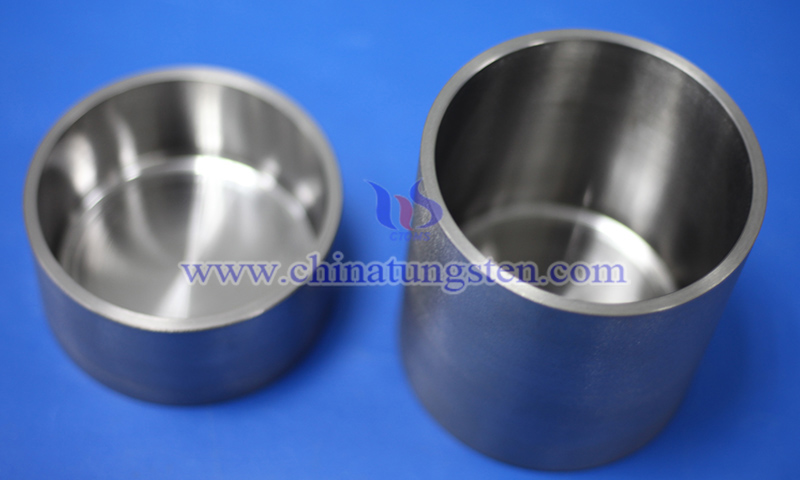
Why Is CTIA’s Tungsten Crucible Used in Vacuum Coating?
Vacuum coating processes require evaporation source materials with excellent thermal stability, cleanliness, and heat distribution uniformity. CTIA’s tungsten crucible offers the following features for high-temperature vacuum coating environments:
(1) Excellent high-temperature stability: Low risk of softening or deformation under high-power electron beam and thermal evaporation conditions;
(2) Low vapor pressure: Extremely low volatilization in high-vacuum environments helps reduce thin film contamination risks;
(3) Reliable structural stability: Maintains good dimensional consistency during long-term heating and repeated thermal cycles;
(4) Stable thermal conductivity: Helps form a uniform evaporation surface and improves coating uniformity;
(5) High material purity: Reduces impurity release and improves film purity and adhesion performance;
(6) Good thermal shock resistance: Suitable for frequent startup, shutdown, and intermittent coating operations.
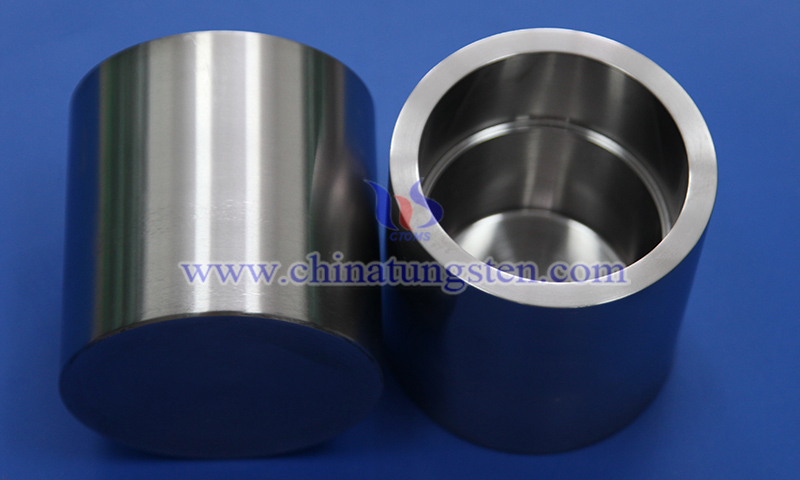
Can Vacuum Coating Use Molybdenum Crucible, Graphite Crucible, or Ceramic Crucible?
Different crucible materials exhibit different performance in high-temperature stability, contamination control, and vacuum compatibility. Material selection depends on process temperature and film purity requirements.
(1) Graphite crucible: May generate carbon contamination at elevated temperatures and is unsuitable for high-purity thin film deposition;
(2) Molybdenum crucible: Suitable for medium- to high-temperature evaporation, but creep deformation may occur during long-term electron beam exposure;
(3) Ceramic crucible: Offers good chemical resistance but relatively poor thermal shock resistance and may crack during rapid temperature cycling.
Compared with these materials, tungsten crucible provides higher high-temperature stability and lower contamination risk, making it more suitable for advanced vacuum coating applications.
Applications of CTIA’s Tungsten Crucible in Vacuum Coating
Tungsten crucible is mainly applied in the following processes: (1) Electron Beam Evaporation; (2) Thermal Evaporation; (3) Multi-arc ion plating and composite coating systems; (4) Metal and alloy thin film deposition; (5) Oxide functional thin film deposition; (6) Semiconductor, optical coating, and OLED (Organic Light Emitting Diode) device manufacturing.
Specifications of CTIA’s Tungsten Crucible
(1) Purity: W≥99.95%
(2) Density: 17.8–18.5 g/cm³
(3) Outer Diameter: 5–300 mm, customizable
(4) Height: 5–350 mm, customizable
(5) Wall Thickness: 0.3–20 mm, customizable
CTIA GROUP has focused on tungsten crucible manufacturing for over 30 years, supporting customized optimization of crucible structure, wall thickness distribution, and heat zone design for vacuum coating systems, while providing integrated solutions covering material preparation and precision machining.
For any inquiry, please contact tungsten crucible manufacturer: CTIA GROUP
Email: sales@chinatungsten.com
Tel: 0086 592 5129696 / 0086 592 5129595
Website: www.tungsten.com.cn
WeChat:

More info>>