
Tungsten Crucible in Refractory Metal Melting
Tungsten crucible in refractory metal melting refers to the critical containment vessel used in the high-temperature melting, purification, and preparation of molybdenum (Mo), tantalum (Ta), niobium (Nb), tungsten (W), and their alloys. Tungsten crucible provides stable containment of metal melts under high-vacuum or inert atmosphere.
Why Use Tungsten Crucible in Refractory Metal Melting?
The melt temperature during refractory metal processing typically exceeds 2000°C, accompanied by strict requirements for a strong reducing or high-purity environment. This demands extreme thermal stability and structural reliability from the crucible material. Tungsten possesses a high melting point (approx. 3410°C) and low vapor pressure, allowing it to maintain structural stability under extreme high-temperature environments. Therefore, Tungsten crucible serves as an important component in refractory metal melting systems.
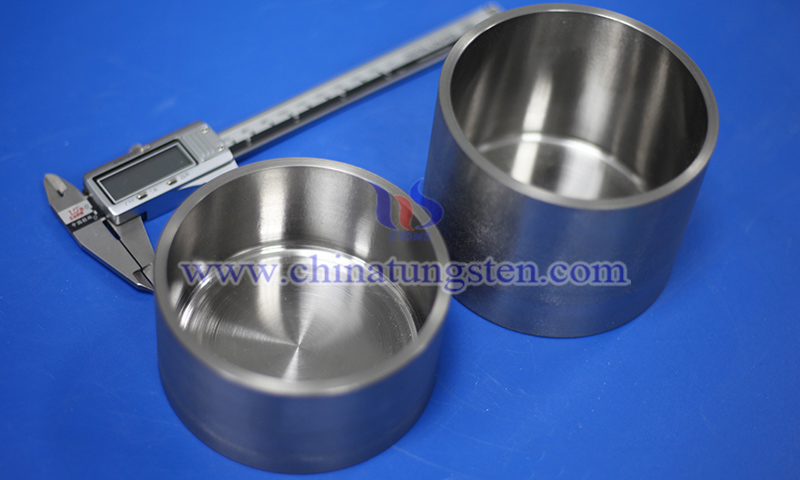
Advantages of CTIA’s Tungsten Crucible in Refractory Metal Melting
(1) High melting point (~3410°C) ensures stable performance in extreme high-temperature environments without structural failure.
(2) Excellent structural stability under long-term high-temperature exposure, minimizing deformation and maintaining integrity.
(3) Low creep rate under high thermal load preserves dimensional accuracy and geometric consistency during operation.
(4) High purity material effectively reduces impurity introduction, supporting high-purity refractory metal production.
(5) Stable thermal conductivity promotes uniform heat distribution, improving melt homogeneity and process consistency.
(6) Superior thermal shock resistance enables reliable performance under rapid heating and cooling cycles in intermittent melting processes.
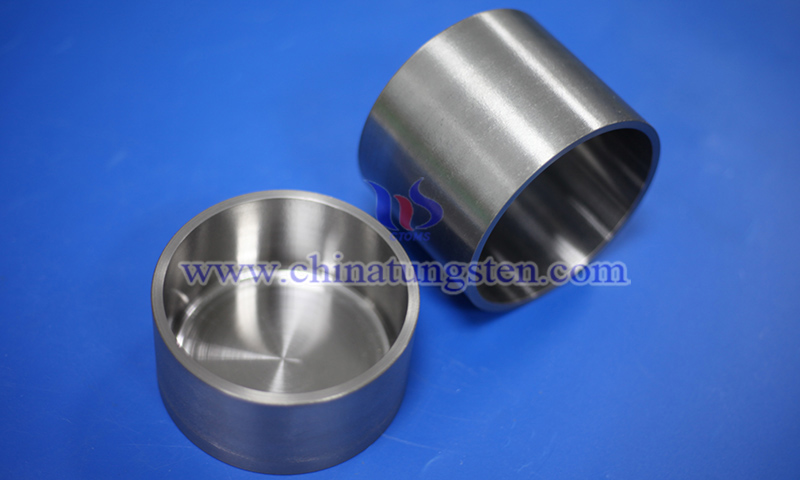
Why Choose Tungsten Crucible Over Other Materials?
In refractory metal melting, different crucible materials show significant differences:
(1) Graphite Crucible: Risk of carbon contamination at high temperatures, making it unsuitable for high-purity metal systems.
(2) Molybdenum Crucible: Lower high-temperature strength, prone to creep deformation during long-term exposure to ultra-high temperatures.
(3) Ceramic Crucible: Poor thermal shock resistance, rendering it unsuitable for frequent thermal cycling.
Compared with these materials, tungsten crucibles offer superior advantages in high-temperature stability and low-contamination control.
Applications of CTIA’s Tungsten Crucible in Refractory Metal Melting
Tungsten crucible is primarily utilized in the following processes: (1) Vacuum melting of molybdenum (Mo), (2) High-temperature purification of tantalum (Ta), (3) Melting and casting of niobium (Nb), (4) Preparation of tungsten-based alloys, (5) Electron Beam Melting (EBM), (6) Vacuum Arc Remelting (VAR).
Specifications of CTIA’s Tungsten Crucible
(1)Material: W ≥ 99.95%
(2)Density: 17.8 ~ 18.5 g/cm³
(3)Outer Diameter: 20 ~ 500 mm
(4)Height: 30 ~ 600 mm
(5)Wall Thickness: 2 ~ 30 mm
(6)Custom dimensions available for specific application needs.
With more than 30 years of expertise in tungsten processing, CTIA GROUP delivers high-performance tungsten crucibles engineered for extreme high-temperature and high-purity melting environments. Through continuous optimization of structure design, wall thickness distribution, and thermal stability, CTIA provides integrated solutions covering material purification, precision forming, and application-oriented customization for refractory metal melting systems.
For any inquiry, please contact tungsten crucible manufacturer: CTIA GROUP
Email: sales@chinatungsten.com
Tel: 0086 592 5129696 / 0086 592 5129595
Website: www.tungsten.com.cn
WeChat:

More info>>