
Precautions for Tungsten Electrode
What are precautions for using tungsten electrodes? As the critical non-consumable electrode material in TIG (Tungsten Inert Gas) welding and plasma welding, tungsten electrode relies on its high melting point (3422°C), low work function, and superior high-temperature strength to stably emit electrons and sustain the arc morphology within high-temperature environments. The application methodology of the tungsten electrode not only alters arc stability but also directly determines weld formation quality, electrode service life, and overall process reliability. Consequently, systematic control must be exercised across multiple dimensions including material selection, tip preparation, parameter matching, and maintenance management.
1.Selection and Material Matching of CTIA’s Tungsten Electrode
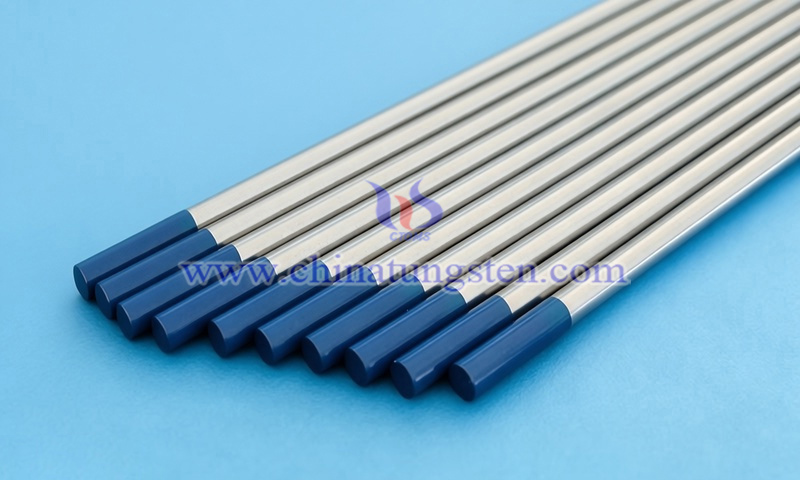
Different types of tungsten electrodes have been developed for specific welding applications. CTIA’s tungsten electrodes include pure tungsten electrodes (W ≥99.95%), ceriated tungsten electrodes (CeO₂ 1.8%–2.2%), lanthanated tungsten electrodes (La₂O₃ 0.8%–2.2%), zirconiated tungsten electrodes (ZrO₂ 0.15%–0.9%), and thoriated tungsten electrodes (ThO₂ 0.8%–4.2%).
Pure tungsten electrodes are suitable for AC (Alternating Current) TIG welding, particularly for aluminum, magnesium, and their alloys. They form a stable ball tip at elevated temperatures, helping distribute heat evenly and maintain arc stability. Ceriated tungsten electrodes have a work function of approximately 2.2 eV and offer easy arc starting under low-current DC (Direct Current) welding conditions, making them suitable for precision welding of thin materials. Lanthanated tungsten electrodes provide balanced performance and stable operation in various welding applications, including automated welding systems. Thoriated tungsten electrodes offer strong electron emission capability but are gradually being replaced in some regions due to radioactive concerns. Zirconiated tungsten electrodes exhibit excellent contamination resistance and are well suited for high-load AC welding.
CTIA believes that proper selection is fundamentally about matching the material’s electron emission performance with its thermal stability, thereby ensuring a stable arc ignition voltage within the 10–20 kV range and maintaining a stable arc column structure.
2.Tip Preparation and Geometry Control of CTIA’s Tungsten Electrode
The tip geometry of tungsten electrode has a significant influence on arc concentration. DC welding generally uses a conical tip with an included angle of 20°–60°, which increases current density and reduces arc wandering. AC welding typically uses a balled tip to improve arc stability and minimize tip erosion.
CTIA recommends that grinding must be performed using dedicated equipment, usually a diamond grinding wheel, to prevent iron contamination or foreign particle embedding. Contamination will cause non-uniform electron emission, leading to arc fluttering or tungsten inclusion defects in the weld. Grinding must be executed axially (parallel to the longitudinal grain direction) to reduce resistance along the electron escape path and optimize electron emission consistency. The ratio of the tip taper length to the electrode diameter is normally controlled between 1:3 and 1:5 to balance electrode rigidity and thermal stability.
3.Welding Current and CTIA’s Tungsten Electrode Size Matching
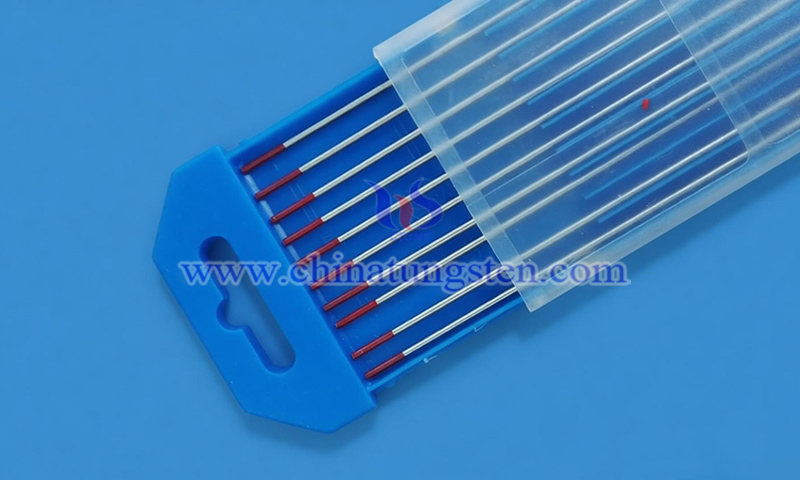
The diameter of CTIA’s tungsten electrode must be matched to the welding current. Improper selection may result in overheating, melting, or unstable arc performance. Common guidelines are as follows:
(1) Diameter 1.0 mm: Suitable for low-current precision welding at 10–60 A.
(2) Diameter 1.6 mm: Suitable for conventional thin-sheet welding at 30–120 A.
(3) Diameter 2.4 mm: Suitable for medium-to-thick plate welding at 80–200 A.
(4) Diameter 3.2 mm and above: Suitable for high-load continuous welding exceeding 200 A.
When the current exceeds the critical thermal equilibrium threshold, the tip temperature can surpass 2000°C, causing localized melting or spitting of tungsten droplets, which severely degrades weld joint integrity.
4.Arc Stability and Contamination Control of CTIA’s Tungsten Electrode
Tungsten electrodes are highly sensitive to contamination. Oxides, oils, and metallic impurities can significantly reduce electron emission capability. After contamination, the work function may increase from approximately 2.1 eV to more than 4.0 eV, resulting in difficult arc starting and arc instability.
Contact between the tungsten electrode and the weld pool should be strictly avoided during welding. Such contact may cause tungsten inclusions that create hard localized defects and reduce weld integrity. High-purity argon is typically used as the shielding gas, with a recommended flow rate of 8–15 L/min to maintain oxygen content below 50 ppm within the arc zone.
5.Thermal Management and Service Life Control of CTIA’s Tungsten Electrode
In high-load welding applications, the tungsten electrode continuously withstands localized thermal shocks exceeding 3000°C. To maximize service life, the welding duty cycle should be carefully managed, with a recommended maximum duty cycle of 60% during continuous operation. In automated production lines, the cumulative thermal loading effect can be mitigated through water-cooled torches or pulse current control (operating at frequencies from 1 to 200 Hz). Under stable operating conditions, the average service life of tungsten electrode can reach 3 to 5 times that of standard copper electrodes, though this drops sharply in highly contaminated or excessive-current environments.
6.Storage, Transportation, and Maintenance of CTIA’s Tungsten Electrode
CTIA’s tungsten electrodes must be stored in a dry environment with relative humidity maintained below 60% RH to prevent the formation of surface oxide layers. Mechanical impacts during transportation must be prevented, as they can induce micro-cracks at the electrode tips that compromise grinding accuracy. Prior to usage, secondary precision dressing or finish grinding is recommended to restore a stable electron emission interface and ensure consistent arc ignition.
Proper utilization of tungsten electrodes is an essential link to achieving high-quality welds. Through systematic grade selection, precise grinding, scientific parameter matching, and strict contamination control, users can significantly boost arc stability, weld consistency, and electrode longevity while enhancing overall manufacturing efficiency.
For any inquiry, please contact tungsten electrode manufacturer: CTIA GROUP
Email: sales@chinatungsten.com
Tel: 0086 592 5129696 / 0086 592 5129595
Website: www.tungsten.com.cn
WeChat:

More info>>