
Tungsten Electrode Cleaning and Maintenance
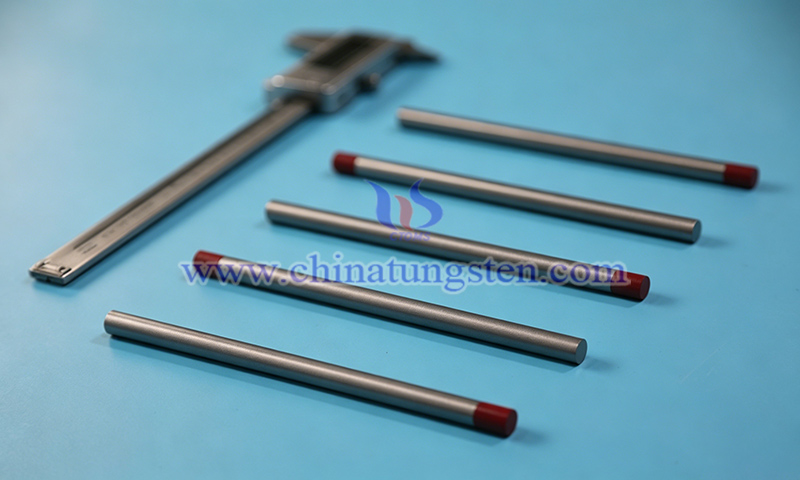
How to clean and maintain tungsten electrodes? Tungsten electrodes are core consumables in TIG welding (Tungsten Inert Gas) and PAW (Plasma Arc Welding). Surface condition and tip geometry directly affect arc stability, ignition performance, weld quality, and electrode service life. CTIA GROUP notes that contamination from oil, oxides, or metal residues can cause arc drift, weld porosity, inclusion defects, and accelerated electrode erosion. Therefore, standardized cleaning and maintenance process is essential for stable welding performance.
1. Why Clean and Maintain Tungsten Electrodes?
(1) Maintain Stable Electron Emission Capability
Tungsten electrodes generate a stable arc through thermionic emission. Surface contamination such as oxides, oil, or spatter reduces emission efficiency, leading to poor arc starting and instability.
(2) Improve Welding Quality
Contaminated electrodes can introduce impurities into the weld pool, resulting in porosity, inclusions, and poor weld formation, especially in stainless steel, titanium, and nickel alloys.
(3) Extend Electrode Service Life
Proper maintenance reduces abnormal tip erosion and can extend electrode life by 20%–50%, lowering overall production costs.
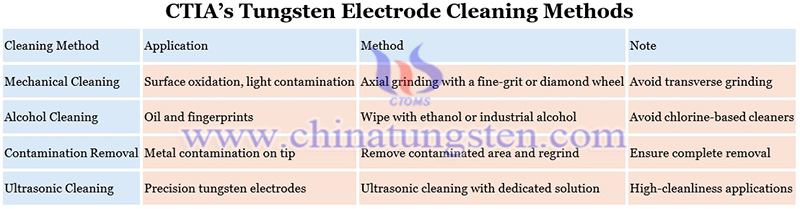
2. Cleaning Methods of CTIA’s Tungsten Electrode
CTIA’s tungsten electrode cleaning methods are shown in the picture below:
3. Daily Maintenance Guidelines for CTIA’s Tungsten Electrodes
(1) Regularly Inspect Tip Geometry
Tip angle, ball diameter, and radius directly affect current density and arc concentration. Rework worn tips promptly.
(2) Avoid Cross-Contamination
Use dedicated grinding wheels for different materials to prevent contamination from carbon steel, stainless steel, or non-ferrous metals.
(3) Proper Storage
Store electrodes in a dry and clean environment to avoid moisture, oxidation, and mechanical damage. Use classified protective containers.
(4) Control Welding Parameters
Excessive current causes tip melting and erosion, while insufficient current reduces arc stability. Parameters must match electrode diameter and material grade.
4. Handling Contaminated Tungsten Electrodes
(1) Blackened Tip
Usually caused by oxidation. Regrind the tip and check shielding gas purity and flow rate.
(2) Excessive Balling At The Tip
Caused by overcurrent or incorrect polarity. Adjust welding parameters accordingly.
(3) Arc Wandering
Check for grinding marks, contamination, or tip deformation, then regrind the electrode.
(4) Difficult Arc Starting
Check surface contamination and tip condition. Regrind or replace the electrode if necessary.
With over 30 years of expertise in tungsten electrode manufacturing, CTIA GROUP supplies high-quality pure tungsten, lanthanated, ceriated, thoriated, zirconiated, yttriated, and composite rare earth tungsten electrodes. Leveraging rigorous powder metallurgy processes and strict quality control systems, CTIA’s tungsten electrodes deliver a uniform microstructure, low impurity levels, stable electron emission, and an extended service life, fully meeting the stringent demands of high-end welding and precision manufacturing.
For any inquiry, please contact tungsten electrode manufacturer: CTIA GROUP
Email: sales@chinatungsten.com
Tel: 0086 592 5129696 / 0086 592 5129595
Website: www.tungsten.com.cn
WeChat:

More info>>