
Tungsten Electrode in Stainless Steel Welding
Tungsten electrode in stainless steel welding refers to the non-consumable electrode applied in the DCEN (Direct Current Electrode Negative) process of TIG (Tungsten Inert Gas) welding for stainless steel. Due to the low thermal conductivity and large thermal expansion coefficient of stainless steel, the welding process requires precise arc stability, controlled heat input, and high electrode tip retention. Consequently, tungsten electrode with high arc stiffness and excellent burn-off resistance is needed to ensure stable and consistent weld formation.
1. Working Principle of Tungsten Electrode in Stainless Steel Welding
Tungsten electrode acts as a cathode in DCEN welding, forming an arc with the workpiece. With a melting point above 3410°C and a work function of 2.4–3.2 eV, the electrode delivers high thermionic electron emission density and a large arc compression ratio, melting the welding wire and base metal to achieve high-quality welding of stainless steel.
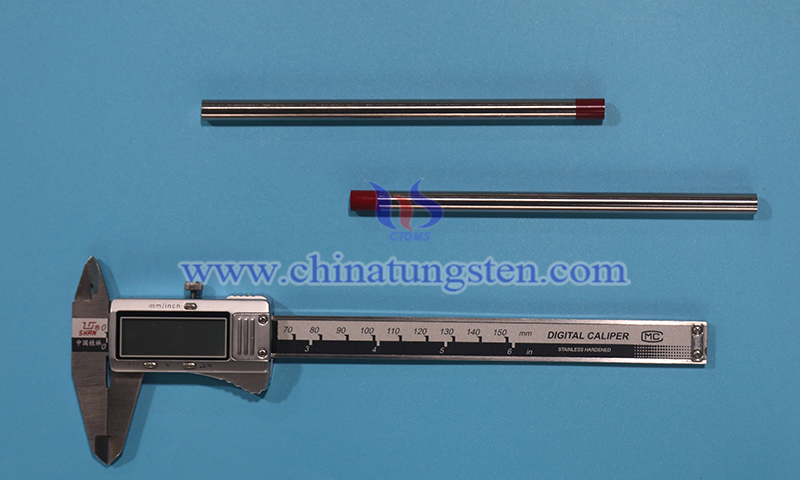
2. Types and Features of CTIA’s Tungsten Electrodes in Stainless Steel Welding
Tungsten electrode options for stainless steel welding primarily include lanthanated, ceriated, yttriated, thoriated, and composite rare earth tungsten electrode types, among which lanthanated, ceriated, and yttriated tungsten electrodes serve as the current industrial mainstream.
(1) Lanthanated Tungsten Electrode (WL15 / WL20)
Doped with 1.5%–2.0% La₂O₃, featuring a work function of 2.8–3.2 eV. It withstands high current, maintains a stable tip, and resists blunting, making it suitable for stainless steel pipelines, pressure vessels, and automated welding as the most widely used eco-friendly tungsten electrode.
(2) Ceriated Tungsten Electrode (WC20)
Doped with 2.0% CeO₂, featuring a work function of 2.4–2.7 eV. It provides rapid arc ignition and a stable maintaining arc under low current (10–50 A), suitable for thin sheet stainless steel, bellows, and precision component welding.
(3) Yttriated Tungsten Electrode (WY20)
Doped with 2.0% Y₂O₃, delivering strong arc constriction and high penetration capability. It resists wear under high load and large current, making it suitable for nuclear power, aerospace, and heavy plate stainless steel structural components.
(4) Thoriated Tungsten Electrode (WT20)
Provides strong electron emission and a stable arc, suitable for medium-to-high current continuous welding. Due to its radioactivity, it is gradually being replaced by non-radioactive rare earth tungsten electrodes in certain sectors.
(5) Composite Rare Earth Tungsten Electrode
Synergistically doped with multiple rare earths to improve arc initiation, arc stability, and burn-off resistance, suitable for high-consistency and automated welding systems.
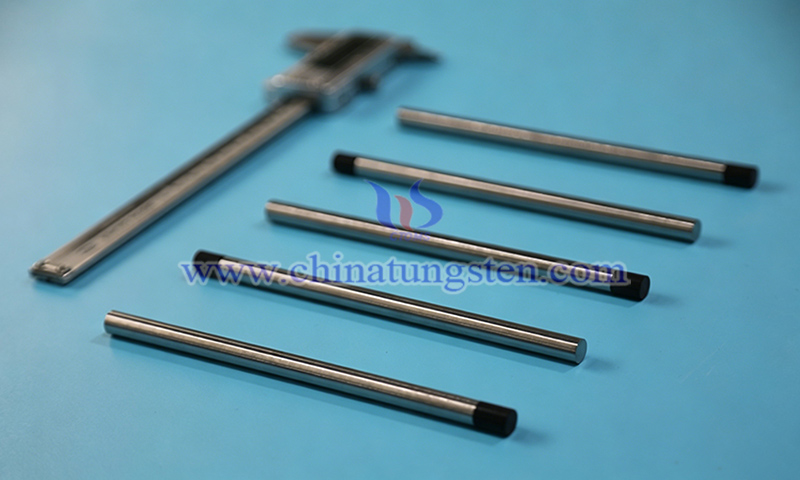
3. Applications of CTIA’s Tungsten Electrodes in Stainless Steel Welding
CTIA’s tungsten electrodes are widely used for welding 304, 316L, and duplex stainless steels. Typical applications include pressure piping, chemical processing equipment, food processing machinery, medical devices, nuclear auxiliary systems, and precision structural components. They are suitable for both manual TIG welding and automated welding production lines.
4. Specifications of CTIA’s Tungsten Electrodes in Stainless Steel Welding
Diameter: 1.0 mm, 1.6 mm, 2.0 mm, 2.4 mm, 3.0 mm, 3.2 mm, 4.0 mm, customizable
Length: 150 mm, 175 mm, customizable
CTIA GROUP (CTIA) has specialized in tungsten electrode manufacturing for more than 30 years. With integrated capabilities in tungsten powder preparation, powder metallurgy forming, sintering, and precision machining, CTIA can consistently supply lanthanated, ceriated, thoriated, yttriated, and composite rare earth tungsten electrodes. Customized diameters and lengths are available to provide reliable electrode solutions for high-quality stainless steel welding.
For any inquiry, please contact tungsten electrode manufacturer: CTIA GROUP
Email: sales@chinatungsten.com
Tel: 0086 592 5129696 / 0086 592 5129595
Website: www.tungsten.com.cn
WeChat:

More info>>